Most advice about a recall training leash starts with the wrong question: “How long should the leash be?” Length matters, but it won't rescue a dog who's overexcited, under-reinforced, or repeatedly rewarded for ignoring you. A long line works best as a communication and context-management tool, giving your dog room to make choices while preventing those choices from turning into a successful game of disappearing.
Reliable recall is built in layers. You control distance, distraction, arousal, reward timing, and physical handling, then increase difficulty only when the dog can succeed. The leash supports that process, but it shouldn't become a tow rope.
Why Your Leash Choice Dictates Recall Success
A long line isn't just a safety tether. It changes what your dog can rehearse.
If you call your dog near a squirrel, another dog, or an exciting scent and the dog ignores you, then nothing happens, you've allowed the recall cue to lose value. Repeating “come” from farther away won't fix that pattern. The dog learns that the word can sit in the background while the interesting thing continues.
The line gives you a way to manage distance before that lesson becomes habitual. You can let the dog investigate, call once when the dog is still capable of responding, and use the line to prevent a casual refusal from becoming a full chase. You're not dragging the dog back to manufacture obedience. You're keeping the situation within a level where attention, movement, and reinforcement can still work.
Practical rule: The line should make success easier, not make correction stronger.
Distance is part of the training plan
A dog who recalls in the kitchen may fail in a field because distance changes the emotional and sensory load. Outdoor recall proofing requires gradual exposure to space and distraction, with the dog still able to process your cue. A structured leash-training foundation helps because loose movement, handler awareness, and responding to guidance all support later recall work.
Use the line to create manageable choices. Start close enough that your dog can turn toward you quickly, reward generously, then allow the dog to return to exploring. That last part matters. If every recall ends the walk, the cue predicts loss of freedom, and the dog has a reason to avoid it.
The line also protects your timing. You can call while the dog is interested but not frantic, observe the response, and reward the instant the dog commits to you. If arousal spikes, reduce distance or move away from the distraction instead of demanding a response the dog can't yet give.
The line prevents bad practice
A dog doesn't need to be physically forced back to learn that ignoring you is unproductive. The important outcome is that the dog can't successfully run off, continue toward danger, or turn your cue into a negotiation. Keep the line slack whenever possible, and use it to manage the environment rather than punish the dog.
A 20 to 50 foot line is recommended for outdoor recall proofing because it provides freedom while preserving handler control, according to Whole Dog Journal's guidance on reliable recall. The right length is the one that lets your dog explore without putting you so far away that your timing becomes poor.
Selecting the Right Long Line for Proofing
Recall work needs a different tool from ordinary sidewalk walking. A standard lead keeps a dog close, which is useful for early exercises and urban handling, but it doesn't test a return across meaningful distance. A retractable leash creates the opposite problem: its moving length and constant line tension make the dog's relationship with pressure inconsistent.
A static long line gives clearer information. The dog can move away, the cue can be delivered without chasing, and the handler can manage the line without the automatic pay-out mechanism of a retractable.

Compare the common options
| Equipment | Useful role | Main limitation |
|---|---|---|
| Standard lead | Close-range practice and everyday walking | Doesn't provide enough distance for outdoor proofing |
| Retractable leash | Casual movement where recall isn't being trained | Encourages line tension and makes distance harder to manage |
| Static long line | Recall practice in open, controlled spaces | Needs active handling to prevent tangles and sudden force |
For most outdoor proofing, choose a static line around 20 to 30 feet. Some situations justify a longer line, but more length also means more line management, more opportunities for tangling, and greater force if a dog reaches the end at speed. The guidance on pulling and leash selection is especially relevant here: equipment should provide predictable feedback, not accidental pressure.
Material and attachment details matter
Biothane is easy to wipe clean and handles wet conditions well. Cotton can feel softer in the hand, although it may collect moisture and debris. Nylon is widely available, but inspect it regularly for fraying, damaged stitching, or weakened clips.
Choose hardware that suits the dog's size and momentum. A light line may be comfortable for a small dog but unsafe if attached to a powerful dog who can sprint to the end. A heavy line can drag, snag, and alter the dog's movement. The aim is enough strength for safety without turning the equipment into an obstacle.
Attach the line to equipment that distributes pressure appropriately for your dog. If your dog lunges, hits the end hard, coughs, or shows discomfort, stop and reassess the setup. Recall practice should develop speed and confidence, not teach the dog to brace against painful neck pressure.
A retractable leash has a legitimate place in some everyday routines, but it isn't my choice for proofing recall. Its handle, thin line, and automatic tension make it harder to keep slack and harder to react cleanly when the dog changes direction.
Mastering Slack and Safe Handling Mechanics
Slack is the test condition. If the line is tight throughout the exercise, you're no longer measuring whether the dog chooses to respond. You're teaching the dog to feel pressure, lean into it, and wait for the handler to manage the problem.
Hold the line in broad loops, never wrapped around your palm or wrist. If the dog takes off, a wrapped line can create severe friction or pull you off balance. Keep your elbows relaxed, feet positioned so you can step with the dog's movement, and your body angled rather than square to a sudden launch.
Two handling patterns
For close work, use an umbilical setup. Keep the dog near you, carry the excess line in loose folds, and reward check-ins before the dog builds speed toward a distraction. This gives you fast access without constantly shortening the dog's movement.
For distance work, use a drag line. Let the line trail on suitable ground while you stay alert to snags, cyclists, vehicles, fences, and other dogs. Pick up the line before increasing difficulty or entering an area where dragging it could create a hazard.
When you need to stop movement, don't grab a fast-moving line with bare hands and don't plant your feet while leaning backward. Step on the line only when you can do so safely, with enough distance to avoid a hard stop at the dog's neck or body. A gradual reduction in available distance is safer and gives the dog a chance to turn toward you.
Keep the line neutral
The dog should feel free until you need to manage the environment. Avoid constantly lifting, tightening, or flicking the line. Those movements become background noise, and the dog may start responding to equipment pressure rather than to your cue.
If the dog reaches the end, soften your stance and prevent further acceleration without jerking. Once the dog turns, release pressure, move backward, and invite engagement with your voice and reward. The release is part of the lesson. The dog learns that orienting toward you restores freedom.
A long line should disappear from the dog's attention until safety or distance requires you to act.
Watch the ground as carefully as you watch the dog. Long lines catch on roots, benches, posts, and vegetation. Train in a space where you can predict the hazards, and don't let the dog build speed across a line that might snag. Good handling protects both the dog's body and your own.
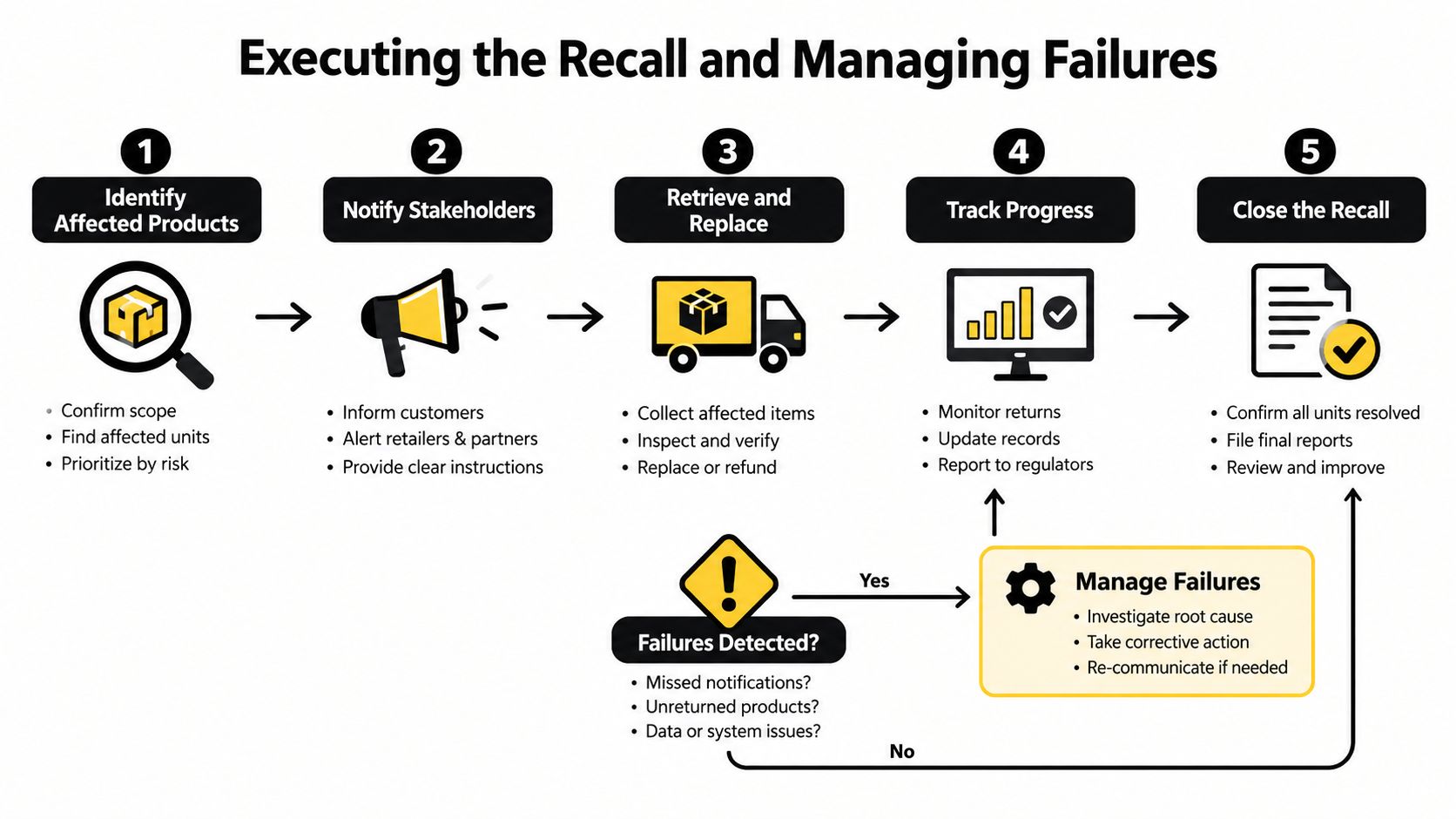
Executing the Recall and Managing Failures
A successful repetition starts before the cue. The dog is exploring, the line is slack, and the distraction is difficult but not overwhelming. Use a cheerful tone, say the cue once, and immediately move backward or turn away so your body helps create an invitation.
When the dog commits to you, reinforce the decision quickly. Use food or another reward your dog values highly, then practice a gentle collar grab before releasing the dog back to the environment. That handling step prevents the dog from learning that returning means an immediate end to freedom.
When the dog ignores you
Suppose your dog spots a runner and keeps moving after the recall cue. Don't repeat the word while the dog is ignoring it. Don't shout, and don't punish the dog when it eventually returns.
Instead, use the line to prevent the dog from reaching the runner, reduce the distance from the distraction, and wait for a lower-arousal moment. You might turn away, move to a quieter part of the field, or invite a simple orientation behavior before trying again. The reset changes the difficulty instead of making the cue louder.
The practical recall sequence for bringing a dog back should always protect the meaning of the cue. If the dog ignores it, the answer is usually better context control and better reinforcement, not more repetitions.
A useful failure protocol
- Prevent the rehearsal. Use the slack line to stop forward travel without yanking.
- Lower the difficulty. Increase distance from the distraction or choose a quieter location.
- Re-engage without repeating the cue. Use movement, a neutral attention sound, or a pause until the dog can think.
- Reward the first turn. Reinforce orientation toward you, then build the return.
- Finish with an easier repetition. End on a response the dog can perform confidently.
The dog shouldn't experience the line as a correction device. It's there so one poor decision doesn't become a dangerous outcome or a well-practiced habit. If failures happen repeatedly, the session is too difficult. Reset earlier, increase reward value, and shorten the training window.
Benchmarks for Safe Off-Leash Transition
Off-leash freedom should follow demonstrated behavior, not a hopeful mood after one good walk. A dog can respond beautifully in a familiar yard and still be unprepared for wildlife, unfamiliar dogs, fast movement, or a new environment.
A widely used starting threshold is at least 80% successful recall on a long leash in highly distracting settings, as described by RSPCA guidance on recall training. Treat that as a minimum training benchmark, not a guarantee of safety.
What readiness should include
One expert standard defines off-leash readiness as responding within 3 seconds in 9 out of 10 attempts across multiple environments, remaining dependable around moderate distractions, accepting a collar grab every time, and needing no long-line guidance for the prior 2 weeks, according to the same RSPCA resource.
Those criteria test more than speed. They test whether the dog can return in different places, tolerate the physical moment when you take hold, and make the choice without relying on a line correction.
| Readiness question | What a yes should look like |
|---|---|
| Does the dog respond promptly? | The dog turns and moves toward you without repeated cues |
| Does the response transfer? | The behavior holds across varied locations |
| Can you safely take hold? | The dog accepts a collar grab without backing away |
| Is the line still doing the work? | The dog has recently succeeded without guidance from it |
| Can the dog handle distraction? | Moderate distractions don't erase the cue |
A controlled 2020 study of pet dogs found that trainers gave an average of 20.3 commands per session, with dogs obeying 15.7 on the first command, or 77%, 4.1 after repeated commands, or 20%, and only 0.6 disobeyed, or 3%. The mean response time for “Come” was 1.24 seconds, according to the controlled recall study in Frontiers in Veterinary Science. The result shows that recall can be measured precisely during structured training, but it doesn't mean every dog is ready for unrestricted environments.
Respect physical risk
Leash handling also has real physical consequences for people. A 2026 University of the District of Columbia study reported that 25% of participants experienced leash forces of 45 pounds or more, while 50% recorded at least 28 pounds during a typical walk, and walking with a dog significantly increased gait variability, a known fall-risk factor, according to the university's report on dog-walking mechanics.
That's another reason to transition gradually. If you can't safely control the line, choose a smaller training area, improve your stance, or work with a professional before adding speed and distraction.
Building a Sustainable Daily Recall Practice
Recall maintenance works best when it becomes part of normal life rather than a special event you remember after a failure. Use ordinary walks for easy check-ins, brief turns toward you, and occasional recalls that end with the dog returning to exploration. Save the hardest distractions for planned sessions where you can control space and reinforcement.
A practical routine has three layers:
- Easy wins: Practice indoors, in a yard, or in a quiet outdoor area where the dog can respond quickly.
- Distance work: Use the static line to expand space while preserving slack and handler control.
- Real-life maintenance: Call the dog occasionally, reward generously, and release the dog again so the cue doesn't always predict the end of activity.
Keep rewards ready before you call. Delayed reinforcement weakens the connection between the response and the outcome, especially when the environment offers stronger competition. Food may be the right payment for one dog, while a chase game, toy, access to a scent, or permission to continue exploring may work better for another.
Watch for early decline
Recall usually degrades in recognizable ways. The dog starts taking longer to turn, checks whether you have food before moving, stops responding around familiar distractions, or returns only after you've moved close. Those aren't reasons to keep testing. They're signals to bring the long line back, reduce difficulty, and rebuild fluent responses.
Avoid turning every return into a collaring event, leash attachment, bath, nail trim, or trip home. Mix in collar-grab practice followed by another reward and release. Your dog should learn that being caught is safe and predictable, not proof that the good part of the outing has ended.
PawCraft offers a personalized 30-day dog training program based on a dog's breed, age, environment, and behavior challenges, with daily exercises, progression guidance, and success criteria delivered after a questionnaire. It can be one structured option for owners who need a clearer routine for recall, pulling, or distraction work.
Reliable recall comes from the whole system working together. The right line gives your dog space, your handling keeps that space safe, your reward arrives at the right moment, and your progression prevents arousal from outrunning skill. If you consistently see slower responses, stop testing freedom and return to the conditions where your dog can succeed.
Build your recall routine around your dog's actual distractions, handling needs, and daily environment with a personalized plan from PawCraft. Use the step-by-step schedule to practice leash mechanics, reward timing, collar grabs, and gradual distance work without guessing what to do next.