
It's 11 p.m., and you're standing by the back door while your dog squats for the third time in ten minutes. A few drops land on the grass, your dog looks uncomfortable, and then they turn back toward you as if they're asking what happens next. You know something is wrong, but you don't know whether to wait until morning, call your vet, or head to an emergency clinic.
That uncertainty is common. Signs your dog has a urinary tract infection can range from mild changes in bathroom habits to symptoms of kidney involvement or a urinary blockage. The classic warning signs include frequent small-volume urination, painful urination, blood, accidents, licking, and foul-smelling urine, all of which are described in veterinary guidance on urinary tract infections in dogs.
This guide will help you sort the clues you can see at home, understand conditions that resemble a UTI, recognize the point when waiting becomes risky, and know what your veterinarian may test. If you're also trying to separate a health-related accident from a training issue, dog training guidance for first-time owners can help with the behavior side. For now, noticing a change is already the most important first step.
What Is Going On With Your Dog Right Now
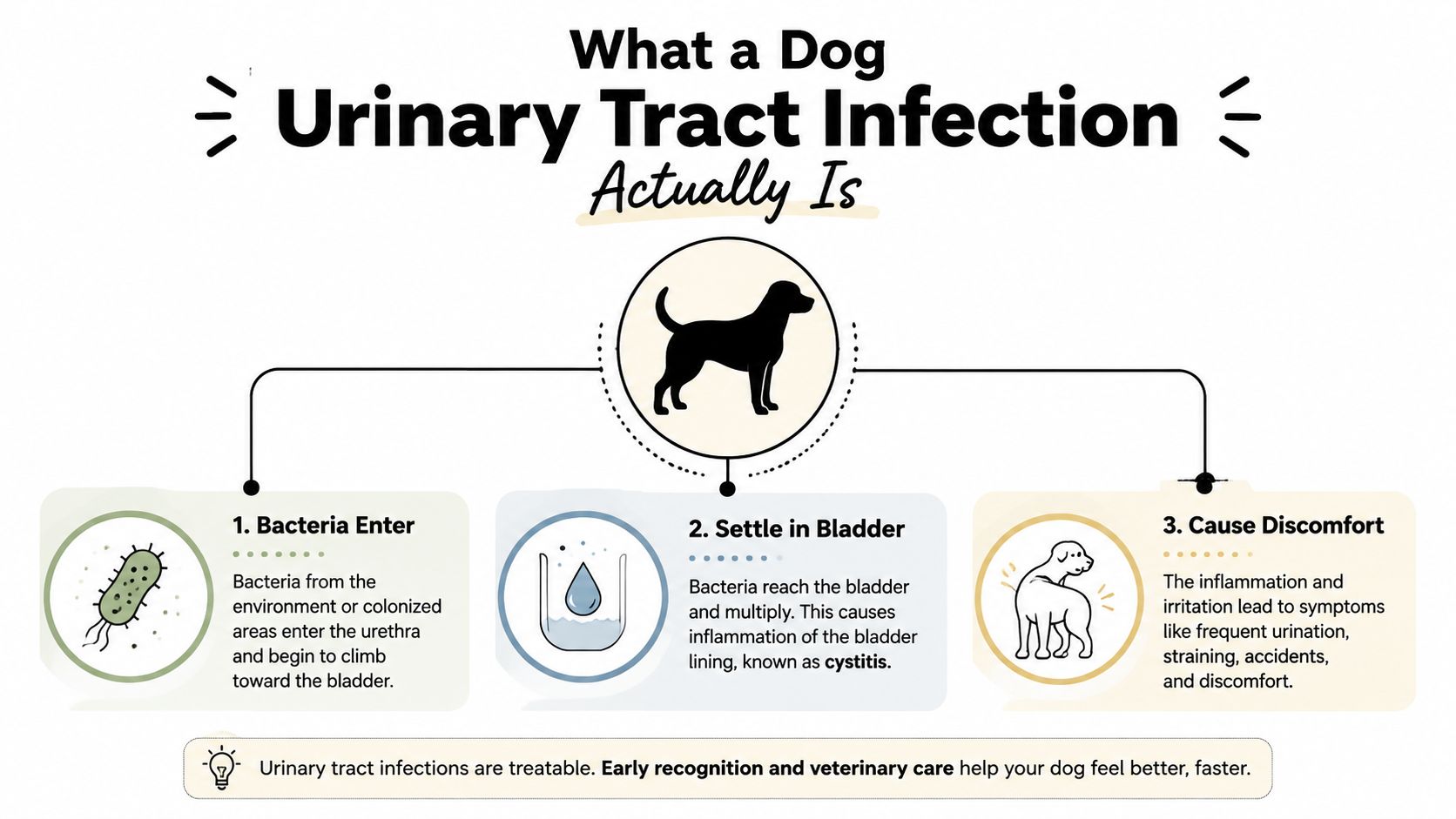
A canine urinary tract infection usually begins when bacteria travel up through the urethra, the tube that carries urine out of the body, and settle in the urinary tract. The bladder is the most common location. When the bladder becomes inflamed, vets may use the term cystitis, which means bladder inflammation.
The lower urinary tract includes the bladder and urethra. Most everyday UTI symptoms come from irritation in this area. Your dog may feel an urgent need to urinate, but the irritated bladder may release only a small amount at a time. That can look like repeated squatting, pacing near the door, or several short walks in quick succession.
The upper urinary tract includes the ureters and kidneys. Infection or inflammation there is more concerning because it can affect the whole dog, not just the act of urinating. Kidney involvement may add pain, fever, vomiting, reduced appetite, increased thirst, and increased urination, as described by Cornell's veterinary information on canine urinary tract infections.
The practical distinction: bladder signs usually center on painful, frequent, abnormal urination. Kidney or blockage signs can make your dog look generally ill.
Veterinarians commonly look for a cluster of symptoms that includes pollakiuria, meaning frequent urination, dysuria, meaning painful or difficult urination, stranguria, meaning straining, and hematuria, meaning blood in the urine. Some dogs can have bacteria present without obvious symptoms, a condition called subclinical bacteriuria. That's one reason a urine test matters more than a guess based on behavior alone.
The Classic Signs Most Owners Notice First
The clearest clues often appear during bathroom breaks. Look at the entire pattern, not just one isolated puddle.
Frequent attempts with very little urine
Pollakiuria means your dog urinates often, usually in small amounts. You may notice your dog asking to go out again soon after returning inside, squatting repeatedly on one walk, or visiting several spots without producing a normal stream.
Inflammation makes the bladder feel full before it is. It's similar to a smoke alarm reacting to a small amount of smoke. Your dog feels an urgent signal, even when there's little urine available.
Straining, discomfort, or vocalizing
A dog with dysuria or stranguria may squat for longer than usual, tense their abdomen, look back at their body, or whimper while trying to urinate. Think of a garden hose with a kink. Your dog is trying to create flow, but irritation, swelling, stones, or another problem makes the process difficult.
Pain during urination can also show up as suddenly stopping mid-stream or refusing to walk away from the spot.
New accidents indoors
A previously house-trained dog who suddenly urinates on a rug, bed, or floor may not be “forgetting” training. Urgency can arrive faster than your dog can reach the door. Accidents are especially meaningful when they happen alongside frequent squatting, licking, odor, or visible discomfort.
Behavioral marking tends to follow a trigger or a repeated pattern. Medical accidents often feel abrupt and out of character.
Pink, red, or bloody urine
Hematuria means blood in the urine. It may appear as a pink tint, red droplets, or a darker discoloration. Even a faint change deserves attention because blood can accompany bladder inflammation, stones, infection, or other urinary disease.
Strong odor or cloudy urine
A sudden foul or ammonia-like smell can be a clue, particularly when it appears with other symptoms. Cloudiness may also occur, although diet, concentrated urine, or dehydration can affect how urine looks and smells.
A combination is more informative than a single clue. Frequent small urinations plus straining or blood should be treated as a possible medical problem, not a training inconvenience.
Subtle Signs That Are Easy to Miss
Not every dog starts with a dramatic puddle or obvious red urine. Some dogs change their routine, especially when the irritation is mild or their other symptoms are easy to explain away.
A senior dog may begin asking for one late-night trip outside, then return to normal during the day. An owner might blame age. But if the dog also circles, squats more often, or produces only small amounts, the change deserves a veterinary conversation.
Another common example is dribbling. You might find a damp patch on bedding, wet fur around the groin, or a few drops on the floor after your dog stands up. Inflammation can interfere with the urinary tract's ability to hold urine comfortably. Dribbling can also have causes other than infection, so the pattern still needs testing rather than assumptions.
Quiet behavior changes
Watch for details that seem minor when viewed alone:
- Extra licking: Repeated licking around the prepuce or vulva may be your dog's attempt to soothe irritation.
- Restlessness: A dog may keep changing position, get up during sleep, or hover near the door.
- A faint odor: Urine on fur or bedding may smell stronger than usual before the change is obvious in the yard.
- A small appetite dip: Reduced interest in food can matter more when paired with urinary changes.
- Unexpected incontinence: Wet spots during sleep or relaxed standing can signal irritation or another urinary disorder.
These signs don't prove a UTI. They do tell you that your dog's urinary habits have shifted. Veterinary guidance on subtle UTI symptoms includes dribbling, wet fur, incontinence, odor, lethargy, and appetite changes among less obvious clues owners may miss.
Write down what you see, including the time of each bathroom trip and whether urine comes out. That simple record can help your veterinarian distinguish urgency from reduced production, which have very different implications.
Conditions That Look Like a UTI but Are Not
Urinary symptoms are a warning category, not a diagnosis. Several conditions irritate the bladder or narrow the urinary passage in ways that look almost identical to an infection.
| Condition | Shared Signs | Distinguishing Clue |
|---|---|---|
| UTI or bladder inflammation | Frequent urination, straining, accidents, blood, odor | Urinalysis and, when appropriate, culture identify inflammation or bacteria |
| Bladder stones | Straining, blood, frequent urination | Crystals, grit, or stones may appear on testing or imaging |
| Prostate disease | Straining, discomfort, blood, urinary changes | An intact male may also have difficulty passing stool or discomfort near the rear |
| Vaginal irritation | Licking, discharge, blood-tinged drops, frequent urination | Examination may show irritation centered on the vulva or vagina |
| Marking or submissive urination | Small amounts and indoor accidents | Episodes connect to specific triggers rather than persistent urgency |
| Diabetes or kidney disease | Increased thirst, frequent urination, accidents | Water intake and broader changes in appetite, energy, or body condition point to a systemic problem |
| Cushing's disease | Increased thirst and urination | A veterinarian looks for a wider pattern of endocrine signs |
Bladder stones, also called uroliths, can scrape and inflame the bladder lining. A dog may strain and pass blood even when bacteria aren't the cause. Some dogs may leave sand-like grit in urine, but you shouldn't rely on seeing grit at home.
In an intact male, an enlarged or painful prostate can press on the urethra. Difficulty passing stool alongside urinary trouble is a useful clue, but only a veterinary examination can confirm the cause.
Behavior can confuse the picture too. Marking is often linked to a person, animal, location, or emotional trigger. A dog with a medical problem may urinate in unusual places because they can't comfortably wait.
If you're working on accidents or other behavior patterns, a structured dog behavior modification plan may be useful after medical causes have been addressed. A urine test remains the dividing line between a training hypothesis and a medical diagnosis.
When to Watch, Call, or Rush to the Vet
Use your dog's overall condition and urine output to choose the next step.
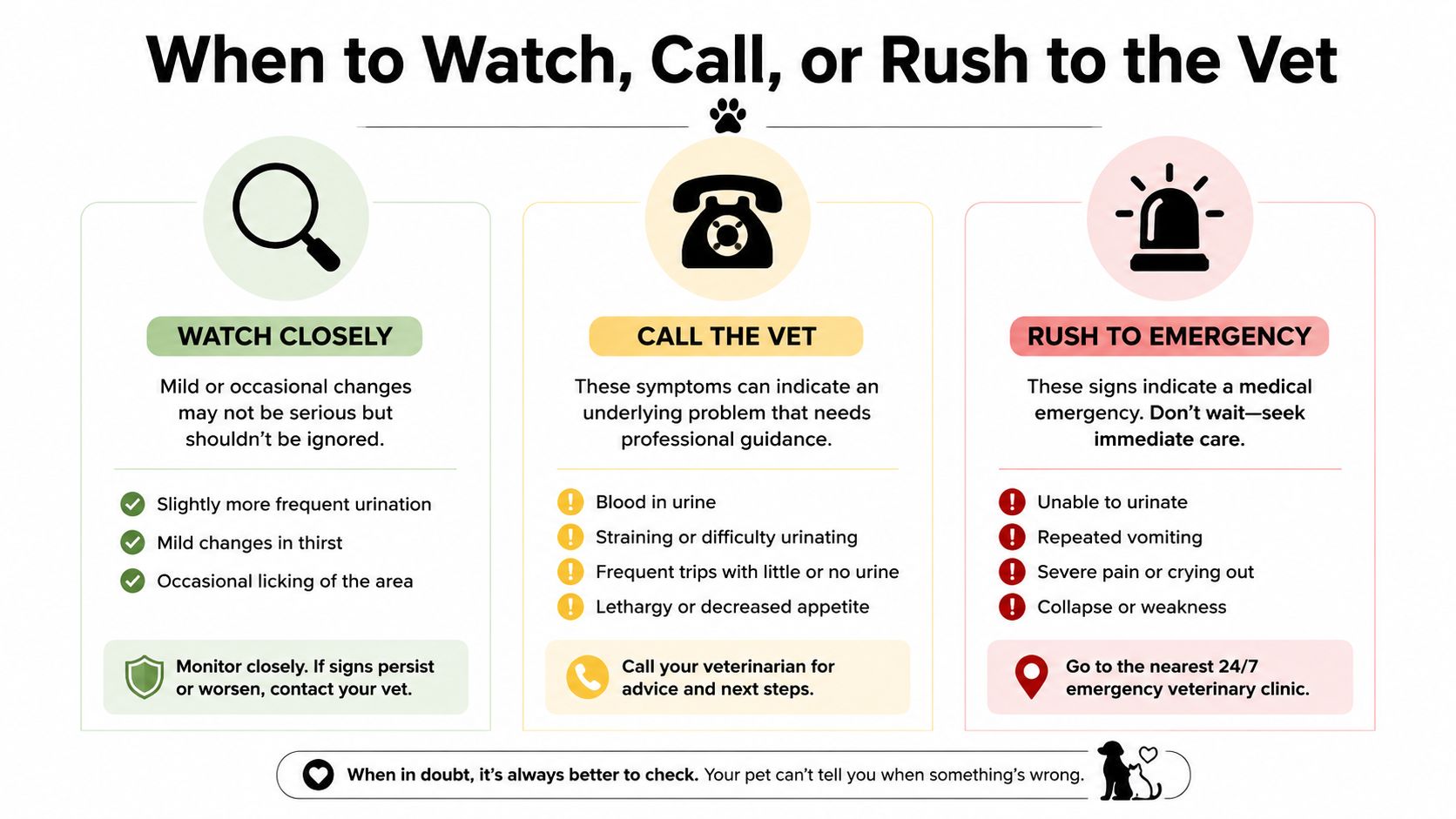
Watch closely only when your dog is acting completely normal, eating well, and showing one mild change, such as slightly more frequent bathroom breaks without blood, straining, or pain. Contact your regular veterinary practice if the change persists or worsens. Don't use home observation to dismiss repeated painful attempts.
Call the vet the same day if your dog repeatedly tries to urinate but produces very little, has visible blood, develops sudden accidents after being reliably house-trained, or seems uncomfortable when lifted or touched near the abdomen. Puppies, senior dogs, diabetic dogs, and immunocompromised dogs deserve a lower threshold for a same-day call.
No urine is an emergency sign, not a wait-and-see sign.
Rush to emergency care if your dog strains and produces nothing or only drops, has a swollen or painful abdomen, cries while trying to urinate, vomits, becomes markedly lethargic, or appears weak or feverish. These signs can occur with obstruction or upper-tract disease, and a blocked bladder can become life-threatening rapidly, particularly in male dogs.
If you're unsure whether urine is coming out, watch the stream rather than assuming your dog's posture means successful urination.
What the Vet Will Do
A suspected UTI visit begins with a hands-on examination. The veterinary team may check your dog's temperature, feel the abdomen and bladder, assess hydration, and inspect the skin around the urinary opening. They are checking for pain, an enlarged bladder, discharge, and clues that the problem has moved beyond the lower urinary tract.
The next step is collecting urine. A free-catch sample is gathered while your dog urinates, often into a clean container. Cystocentesis uses a fine needle to draw urine directly from the bladder. This limits contamination and often gives the clearest sample for checking bacteria. Catheterization places a small tube through the urethra and may be used when urine collection or drainage is needed.
What the urine tests reveal
A urinalysis examines concentration, pH, protein, blood, cells, bacteria, and crystals. These findings work like pieces of a puzzle. Blood can accompany inflammation or stones, crystals may prompt a closer look for stones, and concentrated urine can change its smell and appearance.
A urine culture and sensitivity test checks whether bacteria grow and identifies medicines that are more likely to work. Your veterinarian may recommend it for repeated infections, unusual test results, or symptoms that failed to improve after earlier treatment. The ISCAID companion-animal guidelines support diagnosis, targeted treatment, and responsible antibiotic use.
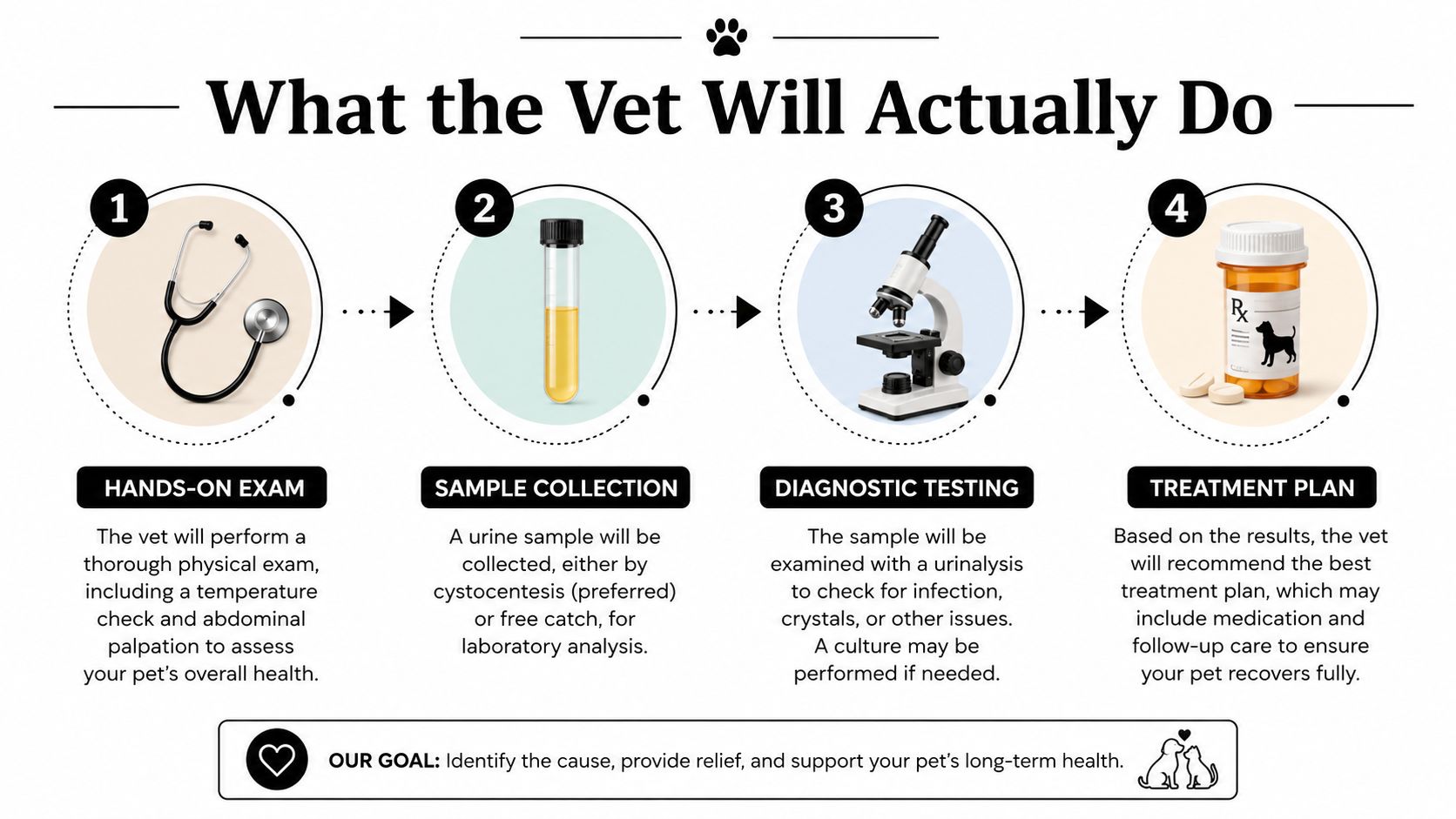
Treatment follows the cause. A confirmed bacterial infection may need a veterinarian-selected antibiotic. Stones, obstruction, kidney disease, and endocrine conditions need different care. A dog can appear more comfortable before the underlying problem is gone, so follow the prescribed plan and ask whether repeat urine testing is needed.
Prevention and At-Home Care That Actually Helps
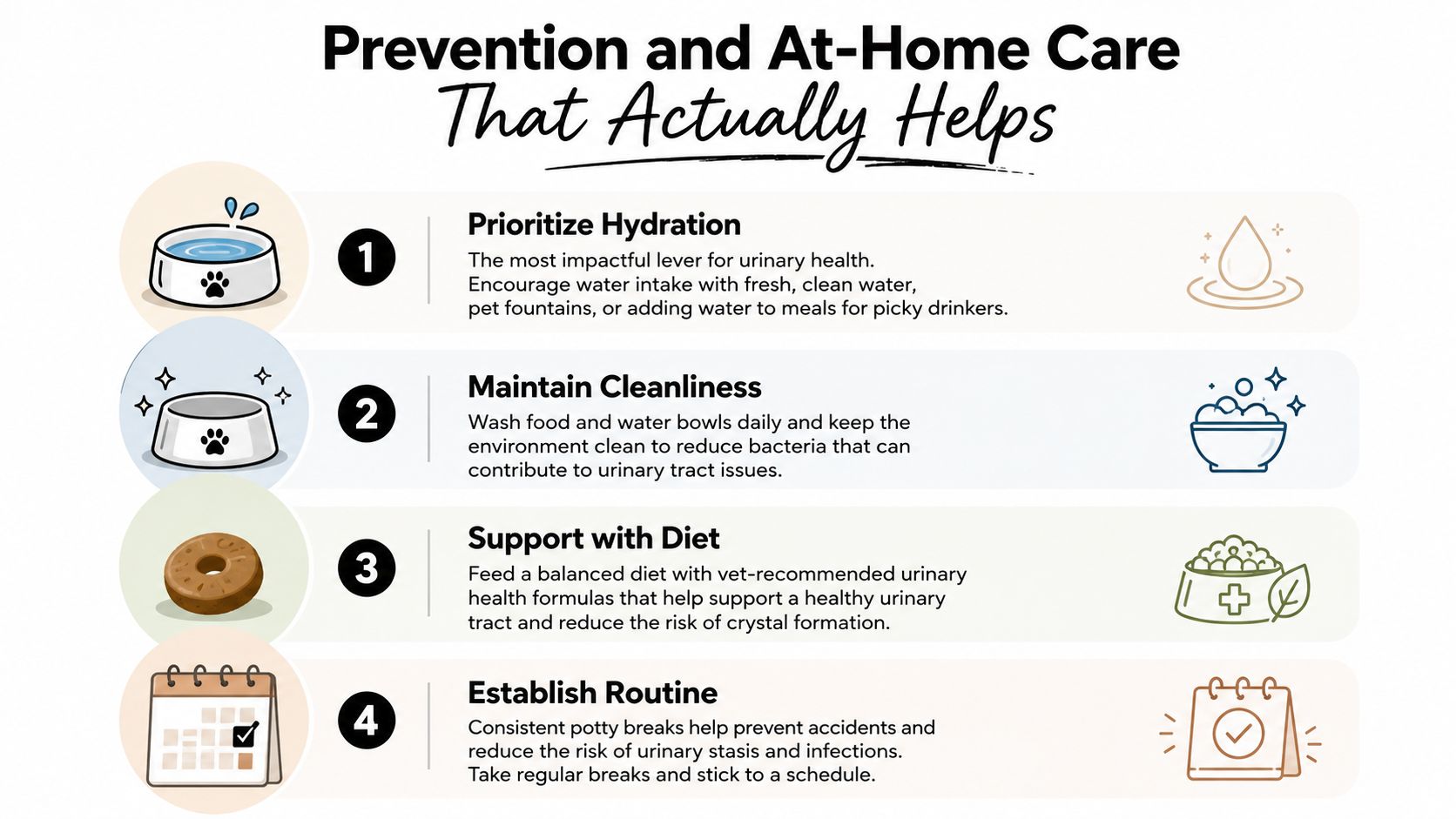
Urinary health is built around water, regular emptying, cleanliness, and medical follow-up. Keep fresh water available in more than one easy-to-reach place. Some picky drinkers use a pet fountain, prefer a wider bowl, or accept extra moisture mixed into food. Ask your veterinarian before adding broth, and choose only a low-sodium option without onion, garlic, or other unsafe ingredients.
Give your dog regular chances to urinate instead of expecting them to hold it for long stretches. Wash water bowls frequently, keep long fur around the urinary opening clean and dry, and check bedding if your dog has started dribbling.
Prescription urinary diets can be important for dogs with recurrent stones or specific urinary conditions. Over-the-counter food changes are not interchangeable with a veterinary diet, and supplements such as cranberry or D-mannose shouldn't replace testing or prescribed treatment because evidence and suitability vary by dog.
For practical routines beyond medical care, first-time dog owner tips can help you organize walks, observation, and daily care.
The most useful habit is simple: notice what's normal for your dog, then respond to a meaningful change. If your dog strains without producing urine, vomits, becomes weak, or seems painful, skip home care and seek emergency veterinary help.
PawCraft creates a personalized 30-day dog training program based on your dog's breed, age, environment, and behavior challenges, which can help you build reliable bathroom routines alongside veterinary care. Visit PawCraft to answer the short questionnaire and receive a step-by-step plan designed for your household.