A dog is usually visibly in heat for about 2 to 4 weeks, with the visible phase typically lasting 14 to 21 days. But the full hormonal cycle is much longer, moving through four stages over months, which is why the timing can feel confusing when you're trying to prevent pregnancy or just figure out what's normal.
If you're reading this because you just noticed blood spots on the floor, a swollen vulva, or your dog acting clingy, restless, or suddenly very interesting to every male dog in the neighborhood, take a breath. This is a very common moment for dog owners, especially first-timers, and it often feels more alarming than it is.
The tricky part is that many owners focus on the bleeding and miss the timing that matters most. A lot of accidental litters happen because owners assume the risk is over once the bleeding fades or stops. It often isn't. That mismatch between what you can see and when your dog is fertile is the part you really want to understand.
Your Dogs First Heat Cycle and What to Expect
The first heat cycle often starts with a mystery. You notice a few drops on the floor, your dog keeps licking herself, and suddenly your calm routine turns into laundry, supervision, and a lot of Googling. Most owners wonder the same thing first: how long is this going to last?
For the noticeable part, the short answer is usually about 2 to 4 weeks. That's the part where you'll likely see discharge, swelling, and behavior changes. It can feel long when you're living through it, but once you know what you're looking at, it gets much easier to handle.
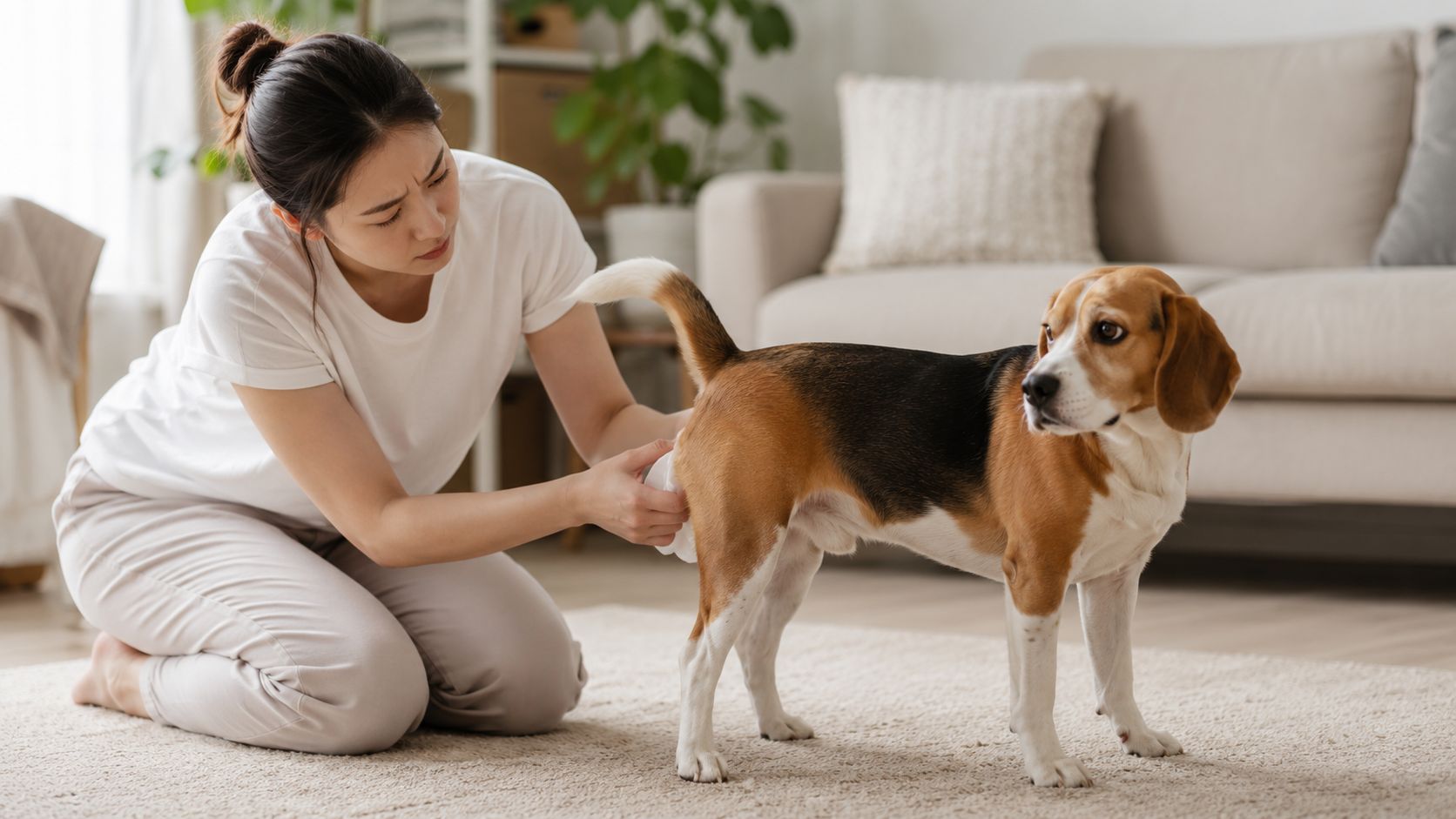
What a first heat often looks like
Some dogs seem a little moodier. Some get clingy. Others act almost normal except for the discharge and the sudden attention from male dogs. A first cycle can also feel easy to miss if the signs are subtle, which is one reason many new owners feel unsure.
If you're still getting your footing with everyday dog care, these first-time dog owner tips from PawCraft can help you build a calmer routine around changes like this.
The best mindset is to treat heat like a temporary management phase. You don't need to panic, but you do need to supervise more carefully than usual.
Why this phase confuses people
The visible part of heat is only one slice of a longer reproductive cycle. Owners naturally lock onto the obvious sign, which is bleeding, because that's the part they can see on the floor, bedding, or fur. But the cycle doesn't work on a simple “bleeding means fertile, no bleeding means safe” timeline.
That's where most mistakes start. Your dog's body shifts through distinct stages, and understanding those stages makes the whole experience less mysterious and a lot safer.
The Four Stages of the Canine Heat Cycle Explained
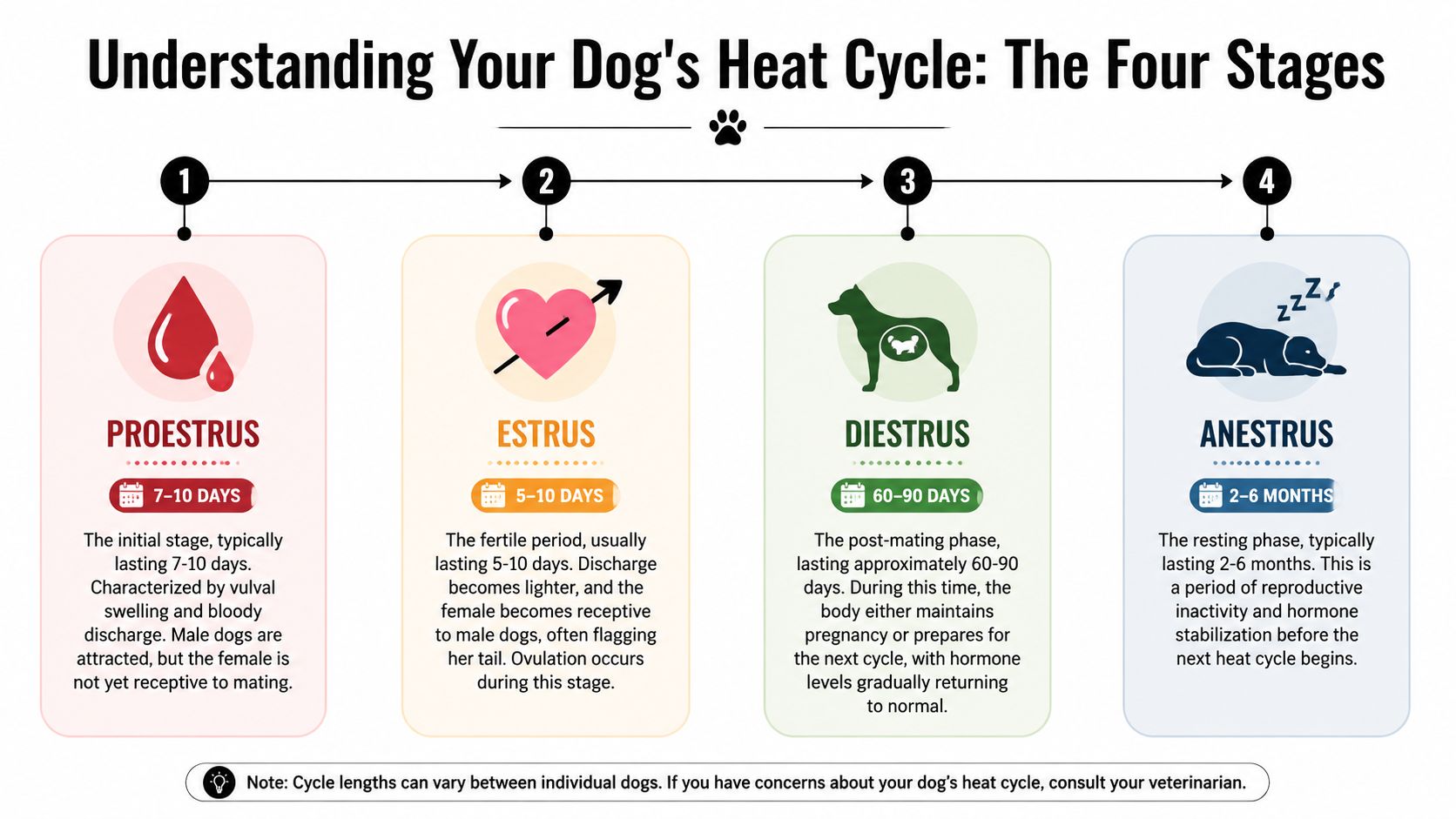
A dog's reproductive cycle has four stages: proestrus, estrus, diestrus, and anestrus.
For everyday owners, the stage names matter because they explain why heat can be so misleading. The part you can see on the floor or bedding is only part of the story. A dog can move from obvious bleeding into her most fertile window, which is why using blood alone as your pregnancy-prevention clock causes so many accidents.
Here's the plain-English version. Proestrus is the lead-up. Estrus is the fertile stage. Diestrus is the hormone phase after fertility ends. Anestrus is the quieter resting stretch before the next cycle.
How each stage usually plays out
Proestrus is usually the stage owners notice first. You may see vulvar swelling, bloody discharge, frequent licking, and sudden interest from male dogs. Many females are still not willing to mate yet, which can create a false sense of security. Owners see blood, the female says “no,” and it feels like pregnancy is not the main concern yet.
Then comes estrus, and this is the stage that catches people off guard. The discharge often becomes lighter, pinker, or more straw-colored. Some dogs flag their tail to the side, stand to be bred, wander, or act extra focused on getting outside. In homes with other dogs, this can also stir up tension or pushy behavior, so it helps to review ways to handle aggressive behavior toward other dogs if the household suddenly feels less calm.
Diestrus follows after estrus. The visible drama fades. Swelling goes down, discharge stops, and her behavior often starts returning to normal. Owners often relax here, which makes sense, but this phase is after the fertile period, not the point when fertility becomes questionable.
Anestrus is the pause between cycles. There are no active heat signs, and the reproductive system is relatively quiet during this stretch.
Dog Heat Cycle Phases at a Glance
| Phase | Typical Role in the Cycle | What You May Notice | Pregnancy Risk |
|---|---|---|---|
| Proestrus | Early heat stage | Swelling, bloody discharge, male dogs interested | Rising, but usually not peak fertility |
| Estrus | Fertile stage | Lighter discharge, standing behavior, tail held aside | Highest |
| Diestrus | Post-fertile hormone stage | Signs fade, behavior settles | Low after estrus has ended |
| Anestrus | Resting stage | No active heat signs | No active heat fertility |
Averages can help, but real dogs do not follow a calendar perfectly. One dog may move through stages quickly. Another may take longer and still be normal.
The safest takeaway is simple. Do not assume your dog is “safe again” because the bleeding slowed down or stopped. In many dogs, the bleeding-heavy days are the lead-in, and the fertile days arrive as the discharge changes and the female becomes receptive.
Practical rule: Keep strict separation from intact males through the full visible heat period and for several days after bleeding seems to taper off, unless your veterinarian tells you otherwise based on your dog's timing.
Recognizing the Signs Your Dog Is in Heat
If you want to know where your dog is in the cycle, act like a detective instead of watching for only one clue. The blood gets all the attention, but it's only part of the story.
According to the PetMD guide to dogs in heat, the visible heat window usually lasts 14 to 21 days and includes proestrus, which averages 9 days and is marked by bloody discharge, followed by estrus, which also averages 9 days and is when ovulation occurs and the dog becomes receptive to mating. PetMD also notes that fertility peaks during estrus, not proestrus.
What you'll usually notice first
Early signs are often physical.
- Bloody discharge: This is usually the first clue owners catch.
- Vulvar swelling: It can be subtle at first, then more obvious.
- Frequent licking: Some dogs clean themselves so much that owners barely notice discharge.
- Restlessness or clinginess: A dog may act unsettled, needy, or distracted.
This early phase can fool people because it looks dramatic. There's blood, swelling, and clear change, so many assume this must be the main fertile period. It usually isn't.
The signs that matter more than the blood
As your dog moves into estrus, the details shift.
The discharge may lighten. Her body language may change. She may stand differently, move her tail aside when touched near the hind end, or become much more interested in other dogs. Those changes matter because they line up more closely with actual fertility than the presence of bright red spotting.
If your dog becomes tense or reactive on walks because other dogs keep approaching, this guide on stopping aggressive behavior toward other dogs may help you manage those encounters more calmly.
A dog can look “less in heat” right when the pregnancy risk becomes more serious. That's the part owners often miss.
A good habit is to track what you see each day. Write down discharge color, swelling, energy level, and behavior around other dogs. You're looking for a pattern, not a single sign.
How Breed Age and Health Affect Heat Cycles
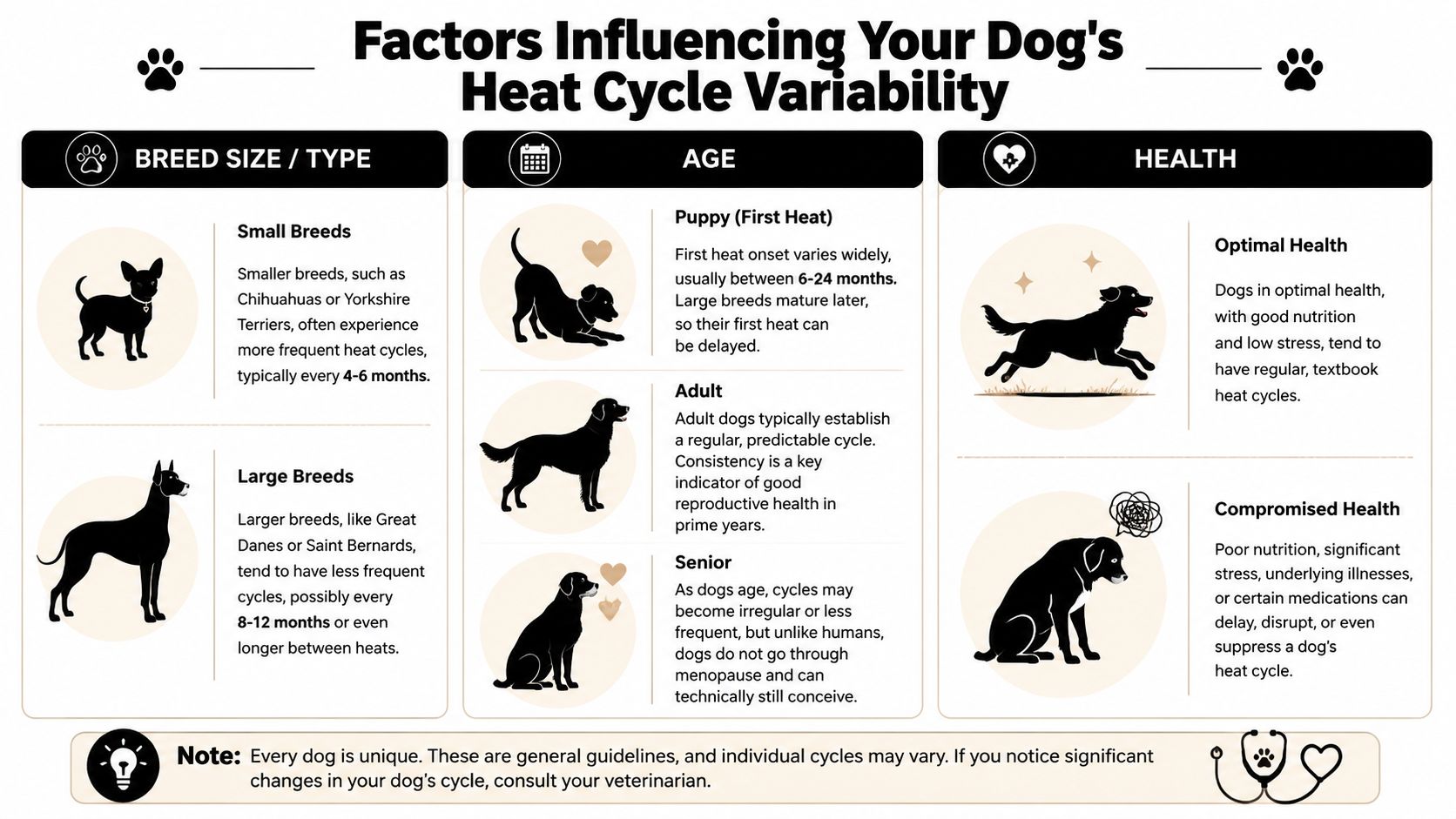
A common owner mistake goes like this: one dog bled for what felt like forever, another barely bled at all, and the owner assumes both dogs follow the same fertility timeline anyway. They do not. Breed, age, and health can change how often a dog cycles, how obvious the signs are, and how easy it is to miss the window when pregnancy can happen.
Size is one of the biggest reasons dogs do not follow one neat calendar. Small breeds often come into heat more often. Giant breeds often have longer gaps between cycles. So if your friend's Yorkshire Terrier seems to be in heat twice as often as your Great Dane, that difference can be normal.
Small dogs and giant dogs do not run on the same calendar
A small dog may have cycles close enough together that it feels like you just finished one before the next starts. A giant breed may go so long between heats that owners start wondering whether they missed it.
That difference matters for planning. If you are trying to prevent pregnancy, you cannot rely on a generic chart from memory. You need your dog's pattern.
Age changes what a heat cycle looks like
A first heat is often the most confusing. Some young dogs show clear swelling and discharge. Others have such mild signs that owners only notice a behavior change, or notice nothing until male dogs start paying attention.
Older dogs can be unpredictable too. The cycle does not always stay perfectly regular year after year. That is why a notebook helps more than memory. Track the start date, when the discharge changes, when she becomes more interested in other dogs, and when male dogs seem most determined to get near her.
That last point matters because the fertile window does not always match the messiest days. A dog may look like she is “finishing up” right when breeding risk is still very real.
Health can blur the pattern
General health can affect how obvious or regular a cycle seems. Stress, illness, body condition, and other medical issues can all muddy the picture. You are not looking for a perfect textbook cycle. You are looking for your dog's usual rhythm, and for changes that break that rhythm.
If your dog is already reactive, overstimulated, or hard to manage around other dogs, a structured dog behavior modification plan can make walks and potty breaks easier during heat, especially during the days when fertility risk is easy to underestimate.
Call your vet if cycles seem unusually far apart, unusually close together, very hard on your dog, or suddenly very different from her normal pattern. Averages are only a starting point. Your dog's history is more useful, especially when you are trying to avoid the dangerous mistake of treating the end of visible bleeding as the end of pregnancy risk.
Practical Tips for Managing Your Dogs Heat Cycle
Daily management matters more than fancy theory. Most owners need help with three things: keeping the house clean, keeping the dog calm, and preventing an accidental mating.

At home and on walks
Start simple.
- Use dog diapers or washable covers: These help with discharge, but they are not a birth control device.
- Set up one easy-clean rest spot: A blanket over a bed, a crate mat with a washable cover, or towels in her favorite spot can save your couch.
- Shorten and control walks: Pick quieter times and avoid places where loose or intact male dogs may appear.
- Supervise bathroom breaks: Heat can make even well-behaved dogs more motivated to roam, and male dogs can be surprisingly persistent.
Some dogs also get cranky, whiny, or extra sensitive during this period. Keep routines steady. Offer calm enrichment at home, and don't force dog-to-dog greetings just because your dog usually enjoys them.
If your dog already struggles with overexcitement, barking, or frustration outside, a structured dog behavior modification plan from PawCraft can help you tighten up routines around walks and household stress.
The safest rule for avoiding pregnancy
This is the part I'd tell any friend not to underestimate.
According to the PDSA advice on seasons in dogs, a common misconception is that fertility ends when bleeding stops. In reality, the fertile estrus phase averages 9 days and can begin after the initial bloody discharge lightens, and 30-day isolation is recommended to be safe.
That means the practical answer isn't “watch until the blood is gone.” The safer answer is “keep her fully separated from intact males for the whole risk window.”
Don't reopen access to male dogs just because the floor looks cleaner. That's exactly when many owners get caught off guard.
A good safety checklist looks like this:
- Secure doors and gates: Don't assume a routine latch is enough if your dog is unusually motivated.
- Skip dog parks and daycare: They create too many variables.
- Keep her on leash outdoors: Even in a fenced area, supervision matters.
- Tell family members the rule: Kids, roommates, and visitors need the same plan.
If you want a visual walkthrough of caring for a dog in heat, this short video is a helpful companion to the basics above.
Spaying Your Dog and When to Call the Vet
If you don't plan to breed your dog, spaying is the long-term way to stop heat cycles and prevent unwanted litters. It also removes the stress of managing every cycle and the constant worry about timing mistakes.
Even when a heat cycle is normal, keep an eye out for anything that seems off. Call your vet if your dog has discharge that smells foul, seems unusually lethargic, appears to be in significant discomfort, or keeps showing abnormal signs longer than you'd expect from her usual pattern. Trust your gut if something feels different from a typical cycle.
A normal heat can be messy and inconvenient. It should not leave you wondering whether your dog seems sick.
If your dog's heat cycle has made walks, barking, reactivity, or home routines harder to manage, PawCraft can help. It builds a personalized 30-day dog training plan based on your dog's breed, age, environment, and behavior challenges, so you get clear daily steps instead of generic advice.