Your puppy comes flying to you in the kitchen, skids across the floor, and sits like a star student. Then you try the same cue outside, and suddenly a leaf, a jogger, or another dog becomes more important than you. That gap is where people get stuck with recall training puppy work.
The problem usually isn't stubbornness. It's that recall isn't one behavior in one place. It's a safety system that has to survive excitement, distance, motion, smells, and the puppy brain that thinks the world is one giant party. When you treat it that way, the training starts to make sense.
Why Puppy Recall Feels So Hard and How to Make It Stick
You call your puppy at the park, and for one second you can see the decision happening. Turn back to you, or keep chasing the smell, the movement, the other dog, the dropped crust near the bench. That hesitation is normal. Recall feels hard because you are competing with things puppies are built to notice.
Dogs do not learn recall as one universal skill. They learn it in pictures. The kitchen is one picture. The front path is another. The park with wind, scents, people, and motion is a much harder picture. A puppy that responds indoors is not being defiant outside. The puppy just has not built enough successful repetitions in that version of the exercise yet.
I teach recall as a safety system with layers. The first layer is easy wins in low distraction places. The next layer is response around mild distractions and short distance. Then comes managed freedom on a long line. Emergency recall sits above all of that and gets trained separately, because an everyday "come" is different from "turn now and get back to me."
That distinction matters more than owners expect.
If you use your recall cue over and over when the puppy is unlikely to respond, the cue starts to lose value. If "come" sometimes means bath, nail trim, getting scooped up roughly, or instant fun-is-over, the puppy learns to hesitate. That is cue dilution in real life. The word stops predicting a strong payoff, and the environment starts winning more often.
A better rule is simple. Protect the cue.
Call once. Pay well. Go get the puppy if you need to. Use a leash or long line so the puppy does not practice ignoring you. If you need to end the fun, call the puppy, reward, clip the leash, then give a few seconds of extra interaction or a short sniff break when you can. That small detail keeps recall from meaning "party over" every single time.
I see the same backfire pattern constantly. Owners wait until the puppy is fully absorbed in something exciting, call three or four times, then sound frustrated when nothing happens. From the dog's side, that sequence teaches two bad lessons. The first cue was optional. Returning to the person may be unpleasant.
What makes recall stick is not bigger bribery. It is cleaner training.
That means setting up repetitions your puppy can win, keeping the cue valuable, and increasing difficulty one piece at a time instead of all at once. Distance is one piece. Distraction is another. Speed is another. If you raise all three together, recall usually falls apart. If you train them in layers, puppies get clearer and faster without burning through the cue.
Building Recall Foundations by Age and Environment
You call your puppy in the kitchen and get a quick spin and sprint back to you. You try the same cue at the front door, and suddenly the smell of the hedge matters more than you do. That is normal. Recall is not one skill your puppy either has or does not have. It is a safety system built in layers, and each layer has to hold before you add the next one.
Start with easy wins in boring places. Build fluency there. Then add one change at a time: a little more distance, a little more distraction, a new surface, a new location. Save true emergency recall for later, after the everyday version is already strong.
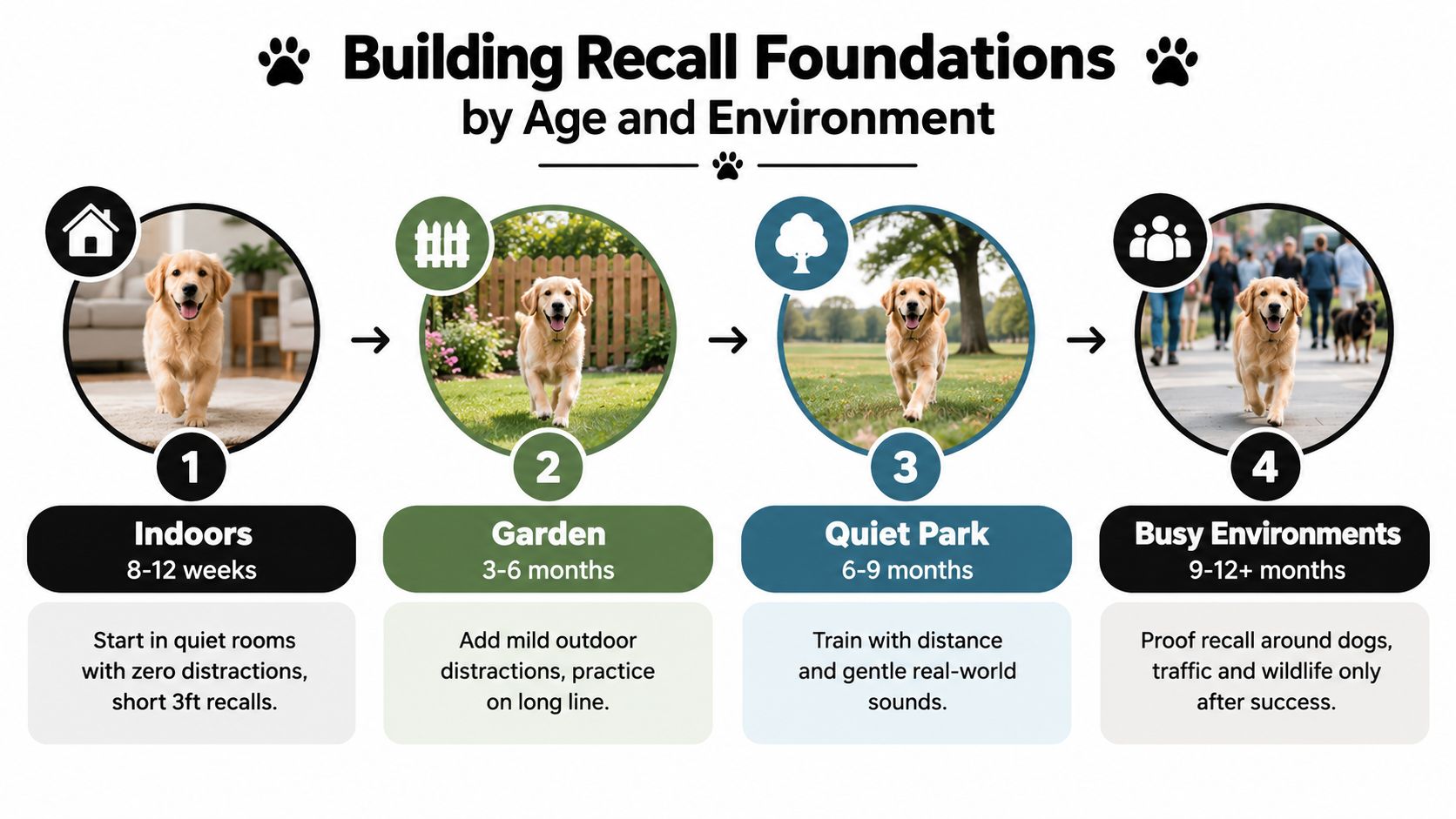
What to expect by age
Age changes attention span, confidence, and speed. Environment changes difficulty even faster. A puppy can look advanced in a hallway and completely inexperienced in a driveway with blowing leaves.
8 to 12 weeks
Keep sessions tiny and clean. A few steps is enough. I want fast turns, fast arrivals, and a puppy who feels successful every time.
Useful setups at this stage:
- Quiet rooms with very little on the floor
- Short distances across a room or around a doorway
- Immediate reinforcement the moment the puppy arrives
- A single recall cue you use the same way every time
Following movement helps a lot here. Step away, let the puppy chase in, then pay. That builds the habit of orienting to you before the outside world gets interesting.
3 to 6 months
Training often gets messy. The puppy is bolder, quicker, and more interested in the environment, so owners start testing recall in places the puppy has not earned yet.
Use controlled spaces first. A garden, driveway, apartment hallway, or fenced patio is enough challenge for many young puppies. Add a long line before you think you need it. That prevents failed repetitions and keeps the training layer intact.
If you want a week-by-week framework, a puppy training schedule by age can help you place recall work alongside socialization, rest, and basic skills.
Adolescent puppies
Adolescence resets the picture for a lot of dogs. The puppy who whipped around beautifully at four months may stare at a bird, a jogger, or another dog and act like the cue never happened.
Do not read that as stubbornness first. Read it as information. The current layer is too hard.
Drop back to shorter distances, easier locations, and more management. I go back to the long line early with adolescent dogs because freedom is not what teaches recall. Rehearsed success teaches recall.
Build by environment, not by ambition
Handlers often increase three things at once: distance, distraction, and freedom. That is why recall can look good one week and fall apart the next.
A cleaner progression looks like this:
Indoors
Kitchen, hallway, living room, bedroom.Controlled outdoor space
Garden, patio, fenced yard, quiet courtyard.Low-traffic public area
Empty park corner, unused field edge, calm path with plenty of space.Real-world environments
Places with dogs, people, bikes, wildlife scent, and movement at a distance.
Stay at each level until the puppy is responding promptly and repeatedly. Then add one variable. If you change location, shorten distance. If you add distraction, make the line longer only after the puppy is already choosing you reliably.
Use the long line as part of the system
A long line is management, not punishment. It stops the puppy from learning that ignoring you leads to more freedom, more sniffing, or a fun chase.
What I want from a long line session is simple:
- The puppy gets enough room to move and investigate
- You keep enough control to prevent run-offs
- The recall cue still predicts a successful return
- The puppy does not get to rehearse disappearing into the environment
That trade-off matters. A six-foot leash can make outdoor recall feel cramped and sticky. Off leash too early creates false confidence right up until the day it does not. A long line sits in the useful middle.
Match the setup to the puppy in front of you
Some puppies can handle a quiet field early. Others lose their brain at the sound of a neighbor closing a car door. Training plans should bend around that reality.
Look at the whole picture:
- Energy level: a frantic puppy often recalls worse than one who has had a short sniff or walk first
- Surface and space: open grass is easier than a narrow path with lots of passing traffic
- Competing rewards: squirrels, puddles, other dogs, and food smells all change the difficulty
- Your timing: late cues usually fail more than weak rewards do
Good foundation work looks almost boring from the outside. That is fine. Boring reps in the right environment are what build the kind of recall you can trust later.
Fun Recall Games That Make Coming Back Your Puppy Favorite Choice
If your recall practice is just “say come, hand treat, repeat,” most puppies get bored and many get sticky. They'll respond when the picture is obvious and the food is visible, but not with any speed or joy.
Games fix that. Good recall games build motion, anticipation, and the habit of chasing back to you fast.
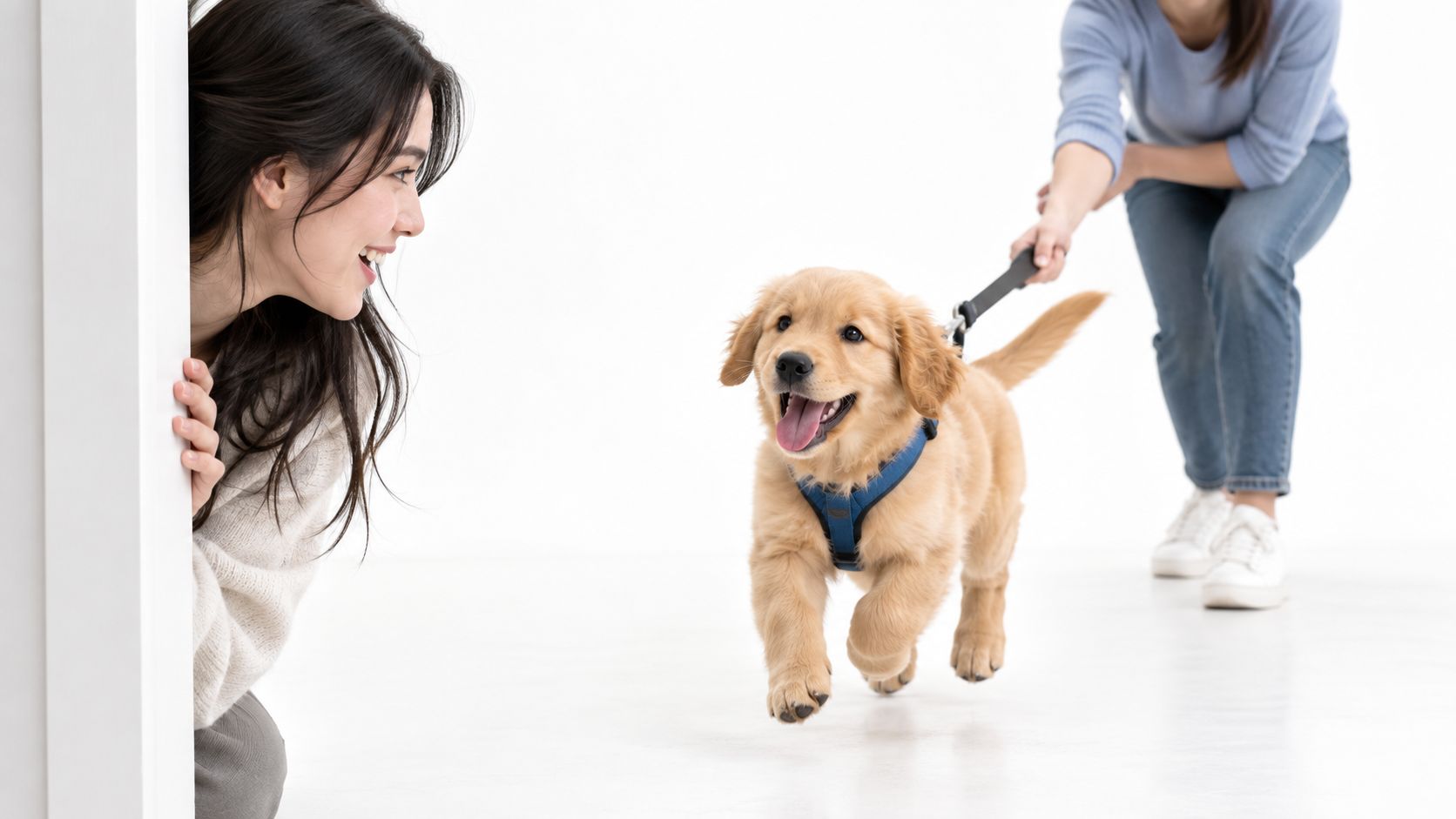
Hide and seek in the house
This is one of the easiest ways to start recall training puppy work without making it feel formal.
When your puppy is mildly distracted, duck behind a doorway, sofa, or wall and call once. The moment the puppy finds you, pay well and make it social. Petting, praise, food, a toy toss, whatever your puppy loves.
Why it works:
- The puppy learns that finding you is rewarding
- You create an automatic check-in habit
- The game encourages speed without pressure
A hallway works beautifully for this. So does moving from room to room when the puppy is already following loosely.
Ping-pong recall between two people
Two handlers stand a short distance apart. One calls, rewards, then the other calls. Keep the rhythm quick and cheerful. Don't wait until the puppy drifts off mentally.
This game is great in a fenced yard, living room, or quiet patch of grass. It teaches your puppy that turning away from one person and driving toward another is fun.
A few details make a big difference:
- Keep sessions short: stop while the puppy still wants more
- Use real rewards: not dry kibble if the environment is exciting
- Vary delivery: sometimes feed at your feet, sometimes toss the reward behind you so the puppy reorients and comes back again
Chase-me recall
Many puppies naturally chase motion. Use that.
Call your puppy once, then immediately turn and jog away in an exaggerated, playful way. Don't run the puppy down. Make yourself the moving target.
This works especially well for puppies who think recall means “walk slowly toward a stationary human and maybe get grabbed.” Motion makes you interesting. It also teaches your puppy to accelerate toward you.
If your puppy starts a keep-away game, chasing usually makes it worse. Running away often flips the whole picture and pulls the puppy back in.
Here's a helpful visual for a few of these setups in action:
Restrained recall
This one creates explosive drive back to you. One person gently holds the puppy by the chest or harness while the handler moves away a short distance, gets animated, and then calls. The helper releases, and the puppy races in for a big reward.
Keep the hold gentle. This is not wrestling. The point is to build eagerness, not frustration.
Good uses for restrained recall:
- Building speed in puppies who trot in slowly
- Increasing enthusiasm before outdoor sessions
- Sharpening focus before adding distraction
Hand target recall
Teach your puppy to bump your palm with their nose. Once that skill is clear, use it at the end of recall so the puppy doesn't just arrive and spin away.
A hand target helps with puppies who:
- come close but don't quite finish
- grab the treat and peel off
- bounce around instead of settling near you
Call, present hand, mark the nose touch, then reward. Over time you get a cleaner finish and easier leash clipping when needed.
Keep the games short enough to stay hot
The best recall games usually end before the puppy fades. If your puppy starts slowing down, sniffing, or scanning elsewhere, the session ran too long or got too hard.
A useful pattern is:
- one game indoors
- one game in a different room or yard
- stop
- repeat later in the day
That rhythm builds appetite. It also protects your cue from becoming background noise.
Emergency Recall Strategies for Safety Critical Moments
Your puppy slips through an open gate, hits the driveway, and starts tracking movement. That is not the moment to find out your everyday recall has been watered down by repetition, low-value rewards, or calling the dog for things they dislike.
An emergency recall is a separate safety cue. It sits at the top layer of your recall system and gets protected like it matters, because it does.
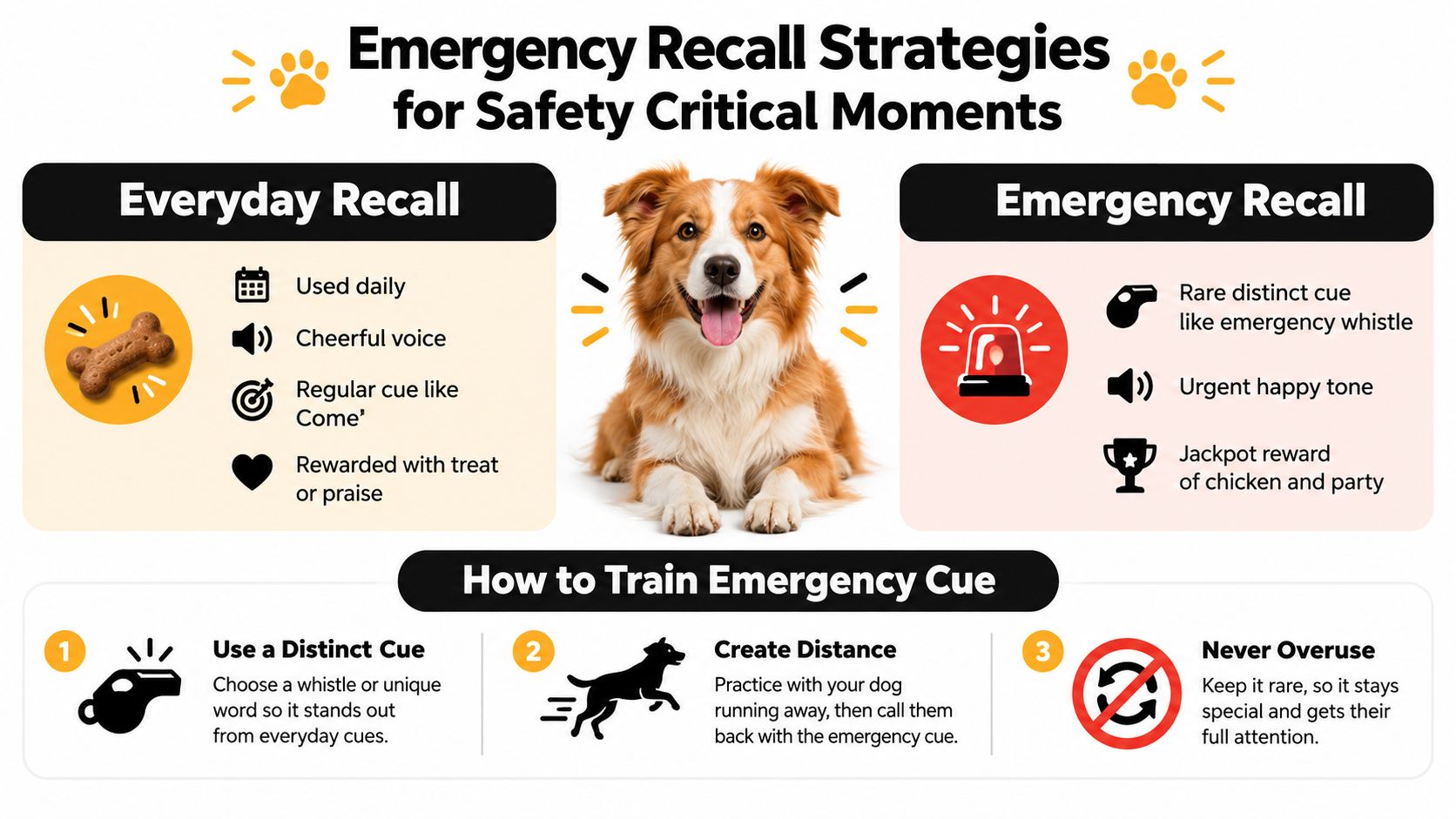
Everyday recall versus emergency recall
Use your regular recall for normal training, routine check-ins, and easy wins around the house or yard. Use the emergency cue for the moments that can turn dangerous fast.
The difference is not just the word. It is the whole history behind it.
| Type | When to use it | Reward style | Common mistake |
|---|---|---|---|
| Everyday recall | Routine training and daily check-ins | Normal food, praise, toy, or release back to play | Repeating it until it fades into background noise |
| Emergency recall | Genuine safety moments and short practice setups | Exceptional rewards, rapid delivery, and calm restraint if needed | Using it too often or pairing it with unpleasant outcomes |
How to build the cue without diluting it
Pick a cue you never use in casual conversation. A whistle pattern works well. So does a word you do not say by accident.
Then load it in very easy setups:
- Say the emergency cue once.
- Turn and move away a few steps so the puppy wants to chase you.
- Pay fast with the best reward you have.
- Clip the leash if you need to, then either end the session or release back to something the puppy still wants, if safe.
For this cue, average rewards are not enough. I want food the puppy does not see all day, or a reward sequence that feels bigger than normal life. Real chicken, roast meat, or a rapid string of treats usually works better than dry training biscuits. If you need ideas for what counts as high value, the AKC guide to choosing high-value dog treats is a useful reference.
Practice in layers. Kitchen first. Hallway next. Then fenced yard. Then long line work around mild distractions. Save the cue from harder environments until the puppy is snapping back to you in easier ones. That is how you build a safety system instead of gambling on a word.
Protect the cue
Owners weaken emergency recall in predictable ways. They use it three times in one walk. They use it when the puppy is unlikely to succeed. They use it right before nail trims, baths, or being hauled home from fun.
Do the opposite. Keep it rare. Keep it clean. Keep the payment high.
If the puppy does not turn on the first call, do not stand there repeating the cue. Go get the puppy, shorten the distance next time, and set up easier practice. Repetition is one of the fastest ways to drain meaning from any recall cue.
If running off is becoming a pattern, tighten management while you train. Gates, long lines, fenced areas, and better doorway habits matter just as much as reps. This guide on how to stop dogs from running away pairs well with recall work because it closes the holes that training alone cannot fix yet.
What to do in the real moment
In a true safety situation, call once and start helping immediately. Move away. Drop low. Open your arms. Make yourself easy to chase. If your puppy is heading toward pressure, many will turn faster if you run in the opposite direction instead of moving straight at them.
When the puppy gets to you, pay first. Secure second, if you can do both smoothly. Do not scold. The dog does not need a lecture for being late to the lifesaving cue.
A note on tools and trade-offs
Some owners ask about stronger tools for faster off-lead reliability. The welfare and training trade-offs are real, and they deserve more than slogans. A study record on recall and e-collar training outcomes summarizes research comparing training with and without remote electronic collars in dogs with off-lead behavior problems, including recall.
For puppies, the practical rule is simple. Build speed and commitment with setup, reward value, and repetition in the right environments. Do not make coming to you feel risky. A recall cue that predicts fear may work once. A protected cue with a long history of success holds up better when you need it.
Reinforcement Schedules That Keep Recall Strong Without Bribery
A puppy who comes only when food is visible has not learned a strong recall system yet. The dog has learned to check your hand first.
That happens all the time. Owners reach for a treat, the puppy spots it, and soon the sequence becomes: see food, then come. Reliable recall works in the opposite order. Hear the cue, commit, arrive, then get paid.
Start with a clear pay pattern
In the early stage, pay every successful recall. That does not create bribery. It creates meaning.
I want the puppy to learn one thing fast. “Come” always leads to something good, and responding quickly is worth it. As noted earlier, short, frequent practice works better than long drilling sessions, especially with young puppies whose focus disappears after a few good repetitions.
Keep the picture clean:
- cue once
- help the puppy succeed
- reward after arrival
- reset before the next repetition
If you skip around too early and start “testing” recall before the behavior is built, the cue gets weaker instead of stronger.
Shift from constant food to variable rewards, not random hoping
Owners often fade food by using less of it and hoping praise will carry the behavior. That is where recall gets thin.
A better progression is to keep paying consistently while varying what the puppy earns. Every correct response gets something, but the paycheck matches the job. Easy recalls can earn kibble, petting, or a quick toss of a toy. Hard recalls should still earn top-shelf rewards.
That schedule keeps the cue strong without teaching the puppy that food must be visible first.
| Distraction Level | Example Scenario | Recommended Reward |
|---|---|---|
| Low | Puppy comes in the kitchen or hallway | Praise, regular treats, brief play |
| Mild | Puppy comes in the yard or from light sniffing | Better treats, toy, happy movement from you |
| Moderate | Puppy recalls away from people, scents, or distant dogs | High-value food such as chicken, liver, or hot dogs |
| High | Puppy responds in a difficult real-world setting on a long line | Best food you have, energetic praise, and sometimes release back to safe exploration |
The release back to sniff matters more than many owners expect. For some puppies, getting to return to the interesting thing is a stronger reward than another biscuit. Used well, that keeps recall from always predicting the end of fun.
Protect the cue from dilution
Recall gets damaged in small, ordinary ways. Calling when you cannot enforce it. Repeating “come, come, come” while the puppy keeps sniffing. Paying the same dry treat for a kitchen recall and a hard turn away from a distraction outside.
Each of those choices teaches something unhelpful.
I treat recall like a layered safety skill. Easy indoor wins build speed. Yard and leash work build habit. Harder recalls get better pay and more setup. Emergency recall sits at the top and stays heavily reinforced for life. If every layer pays the same and gets used the same way, the cue flattens out.
Food after the behavior is reinforcement
The timing is what matters. Show the treat first and many puppies learn to bargain. Cue first and pay after commitment, and the reward strengthens the behavior you want.
A practical schedule looks like this:
- Foundation stage: every correct recall earns food
- Building stage: every correct recall earns a reward, with food, play, praise, or release used on purpose
- Maintenance stage: easy recalls may earn lower-value rewards, but difficult recalls still get paid well and surprise jackpots stay in the rotation
Those jackpots help preserve speed. I still use them with dogs that know recall well, because a cue you want in an emergency should never become ordinary background noise.
Use daily life to keep the behavior honest
Formal sessions teach the skill. Daily life keeps it useful.
Call your puppy between rooms. Call, clip the leash, reward, then go back to normal life. Call in the yard, pay, then release back to exploring if the area is safe. On walks, use short check-in recalls that do not always end the outing.
For owners who want a clearer system for planning rewards and practice, this guide to reward-based dog training lays out the reinforcement principles behind it. PawCraft can also map those sessions by age, environment, and behavior goals.
One rule holds across every stage. Do not make your puppy wonder whether coming to you was a bad deal.
Troubleshooting Common Recall Problems and Your Next Steps
You call your puppy in the park. He flicks an ear, keeps sniffing, and a second cue slips out of your mouth before you can stop it. That moment is where recall gets weaker or stronger. Every failed repetition teaches something, so the job here is to tighten the system before the cue gets diluted.
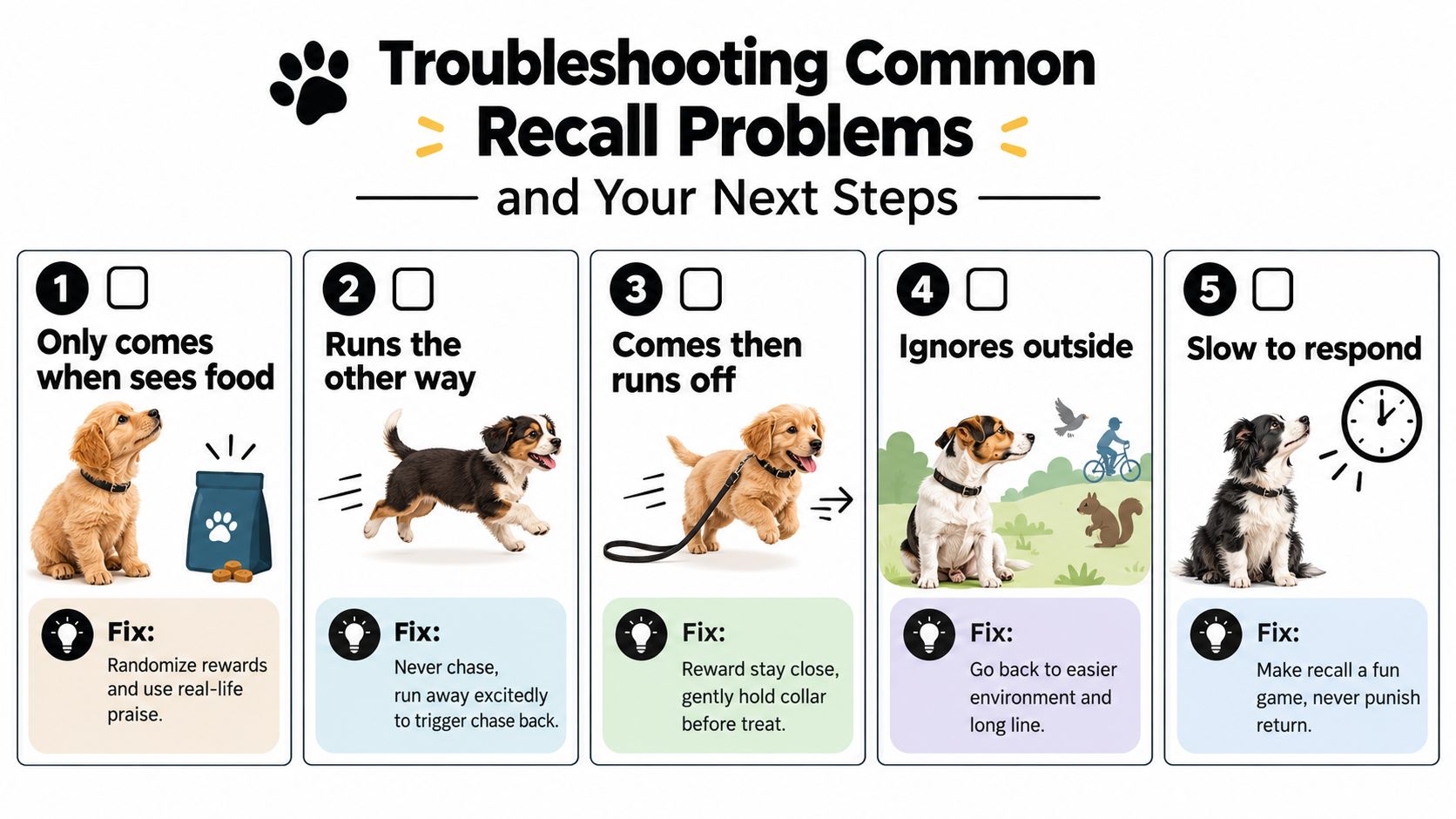
Most recall problems come from one of three places: the environment got harder than the puppy was ready for, the reward history got thin, or the cue got used too often without a clean response. That is good news, because those are training variables you can fix.
When the puppy only comes if food is visible
Visible food often creates a puppy who checks your hands before making a choice. Put the reward out of sight, give the cue once, and pay after the puppy commits and arrives.
Then look at what usually happens after recall. If coming to you regularly means leash on, play over, crate time, or leaving the fun, the puppy is reading the pattern correctly. Build more recalls that end with payment and release back to sniffing or play when it is safe. That keeps the cue from meaning, "fun is over."
When the puppy runs the other way
Many puppies do this because the picture has accidentally turned into a chase game. Standing still and repeating the cue rarely helps.
Change the picture fast:
- Move away from the puppy: movement triggers pursuit better than pleading
- Drop low and open up your body: crouching and backing off is more inviting than marching forward
- Use a long line: stop the rehearsal of ignoring you
- Pay generously for the catch-up: speed should be worth it
If I see a puppy arc away after the first cue, I do not test the recall again in that moment. I use management, reset the distance, and make the next rep easy enough to win.
When recall is great indoors and weak outdoors
Indoor recall and outdoor recall are not the same skill yet. The kitchen is a beginner classroom. The park is an exam with squirrels, scent, motion, and distance layered on top.
The controlled recall training study from 2020 is helpful because it shows that dogs can build fast response in structured sessions under low-conflict conditions. Real reliability takes longer because you still have to proof the cue around competing rewards. That means shorter distances, fewer distractions, and many successful reps on a long line before expecting off-leash performance.
When adolescence wrecks your progress
Adolescence often looks like the puppy "forgetting" recall. What usually changed is motivation, not memory. The environment got more interesting, independence increased, and weak spots in the foundation showed up.
Use a reset:
- Shorten the distance
- Lower distraction
- Go back to fenced areas or a long line
- Bring back higher-value rewards for harder recalls
- Save the emergency cue for true emergencies only
This stage frustrates owners because the puppy succeeded last month in easier setups. That history can tempt you to ask for too much, too soon. Resist that. Recall stays strong when each layer holds before you add the next one.
Slow recall is information. It usually means the distraction level outranked your current reinforcement, or the cue has been used in situations your puppy could not handle yet.
Your next two to three weeks
Treat the next phase like system maintenance, not a loyalty test. Keep the recall cue clean. Practice where you can control outcomes. Protect speed and enthusiasm.
A simple plan works well:
- Use one recall cue
- Say it once, then help the puppy succeed
- Keep using the long line until responses are consistent across locations for two to three weeks, as noted in the VCA guidance cited earlier
- Mix easy wins with slightly harder reps instead of making every recall a test
- Keep the emergency cue separate and highly paid
- Never punish the return, even if you are frustrated
Look for small signs that the system is improving. A faster head turn. Quicker commitment off a smell. One clean recall past a mild distraction. Those are the pieces that build a recall you can trust.
If you want a more structured way to train this without guessing what to do each day, PawCraft creates a personalized 30-day plan based on your dog's age, breed, environment, and recall challenges. It's useful when you need daily exercises, progression steps, and clear success criteria instead of a pile of generic tips.