You've just brought home a puppy, and every room suddenly feels like a new adventure. They're bouncing around the house, staring at the front door, and sniffing at the world beyond it. You want to show them everything, but you've also heard the warning to keep puppies indoors until they're fully vaccinated. So, when can you bring a puppy outside without putting their health at unnecessary risk?
The answer isn't one universal date. A private yard, a carried trip through your neighborhood, a controlled puppy class, and a busy dog park all carry different levels of risk. The safest approach balances disease protection with the puppy's limited socialization window, then gradually expands access as vaccinations progress.
Your veterinarian should make the final call based on local disease risks, your puppy's health, and their vaccination history. Still, the framework below will help you understand what you can do now, what should wait, and how to make each stage positive. If you're preparing for puppyhood more broadly, these first-time dog owner tips can help you build a steady routine from the beginning.
Welcome Home Now What About the World Outside
On the first morning, Maya carried her puppy, Noodle, to the front step. Noodle watched a delivery van roll past, heard a bicycle bell, and lifted his nose toward the damp grass. Maya wanted to put him down immediately. At the same time, she remembered her veterinarian saying that his vaccination course wasn't complete, so she stood there wondering whether even the sidewalk was off-limits.
That hesitation is understandable. New puppy owners often hear two pieces of advice that seem to conflict. One says to protect a young puppy from unfamiliar dogs and shared ground. The other says to introduce the puppy to the world early, before unfamiliar sights and sounds become frightening.
Both concerns are valid. The key is to separate going outside from walking everywhere on public ground. Your puppy may be able to experience fresh air, traffic sounds, new surfaces, people, and carefully selected dogs before they're ready for unrestricted neighborhood walks. The safety decision depends on where your puppy goes, what they touch, and which animals they encounter.
The practical answer: Start outdoor learning early, but reserve high-contact public areas for the point your veterinarian considers safe after the primary vaccination course.
A house with a clean, private fenced yard gives you different options from an apartment beside a busy dog-relief area. In an apartment, a carrier or stroller may be the safer bridge. In a house, a private yard may offer useful exploration, provided unknown animals don't use it and your veterinarian approves it.
Think in phases rather than a single green light. Your puppy can begin with protected observation, move to controlled contact, and eventually graduate to public walks. That approach protects their body while giving their developing mind the experiences it needs.
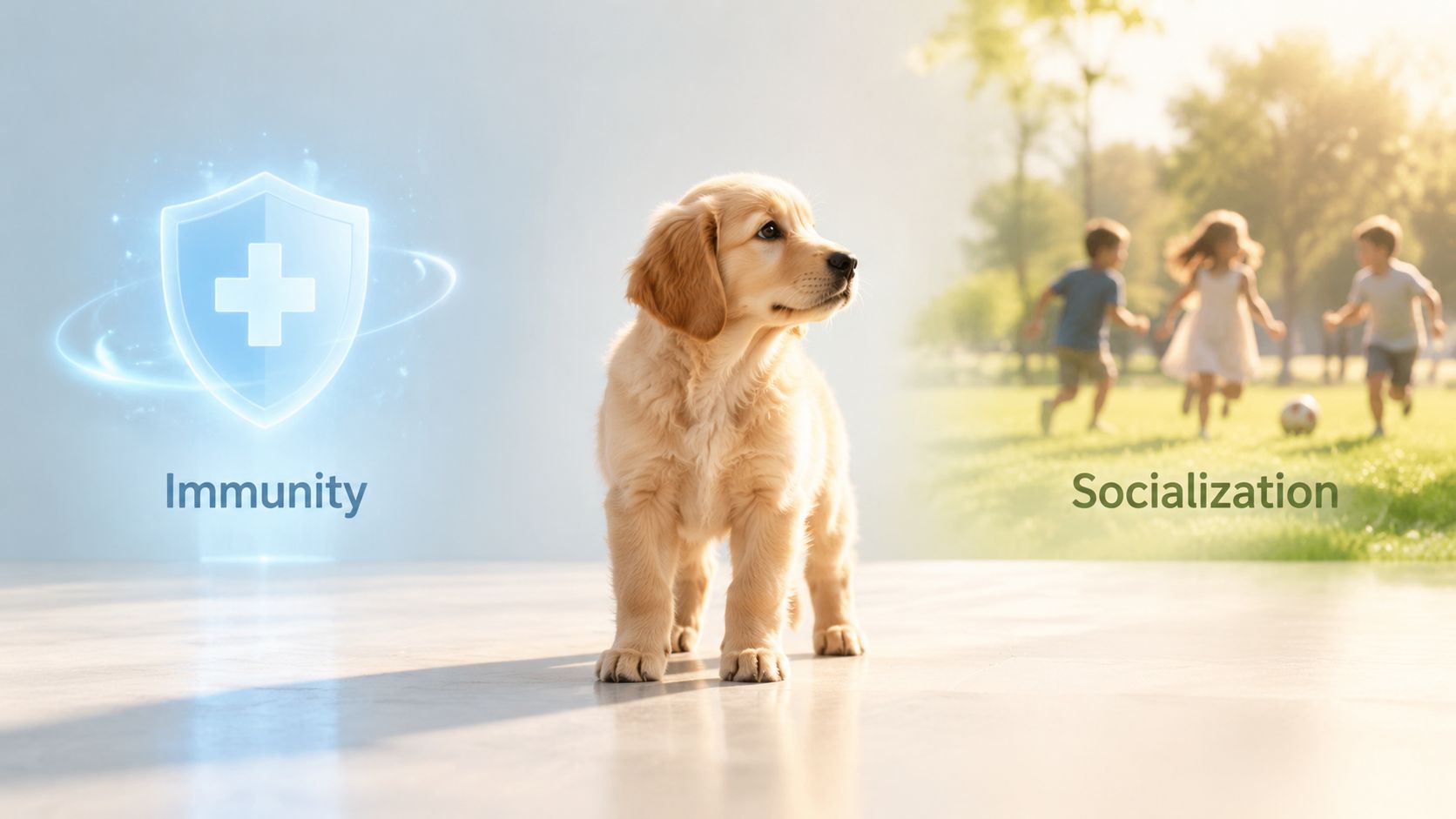
The Great Puppy Paradox Immunity vs Socialization
A puppy's first weeks at home involve two timelines moving together. Vaccinations build physical protection, while socialization teaches a puppy how to interpret the world. Waiting for one process to finish before beginning the other can leave a gap in the puppy's development.
The first three months are the primary socialization window, and controlled puppy socialization classes may begin as early as 7 to 8 weeks of age when exposure is safe and carefully managed. The goal is thoughtful risk management, not complete confinement.
Vaccinations work like a growing fortress against infectious disease. Socialization sends your puppy on safe, brief “diplomatic missions” beyond that fortress. Your puppy can notice people wearing hats, hear engines, feel different textures, watch children move, and learn that unfamiliar experiences can be predictable and rewarding.
Why total isolation creates another risk
A puppy kept indoors throughout early development may have too little practice processing ordinary sights and sounds. Later, a busy pavement, unfamiliar dog, or passing stroller may feel overwhelming because those experiences arrive without gradual preparation.
Infection risk still matters. Public grass, dog parks, pet-store floors, and places used by unknown dogs can expose a vulnerable puppy to hazards you cannot see. The workable middle ground is controlled exposure with boundaries.
Use a risk filter before every outing
Ask four questions:
- Who has access to this place? A private yard used only by healthy, vaccinated household dogs presents a different risk from communal grass.
- What will my puppy touch? Carrying your puppy prevents direct paw contact with shared ground.
- Can I control the interaction? A planned meeting with a known dog is easier to manage than a crowded dog area.
- Can my puppy leave easily? A carrier, secure harness, or nearby exit allows you to end the experience before stress builds.
Your home setting changes the safest starting point. In an apartment, your puppy might watch street activity from a secure carrier. In a house, a private fenced yard may provide room to explore, as long as unknown animals do not use it and your veterinarian approves. The address does not decide everything. Access, surfaces, animal traffic, and your ability to leave matter more.
Give your puppy manageable experiences, pair them with food or calm praise, and stop while they remain comfortable. Socialization works when the puppy has enough safety to observe, recover, and choose to engage. The aim is steady learning, not maximum stimulation.
Decoding Your Puppy's Vaccination Timeline
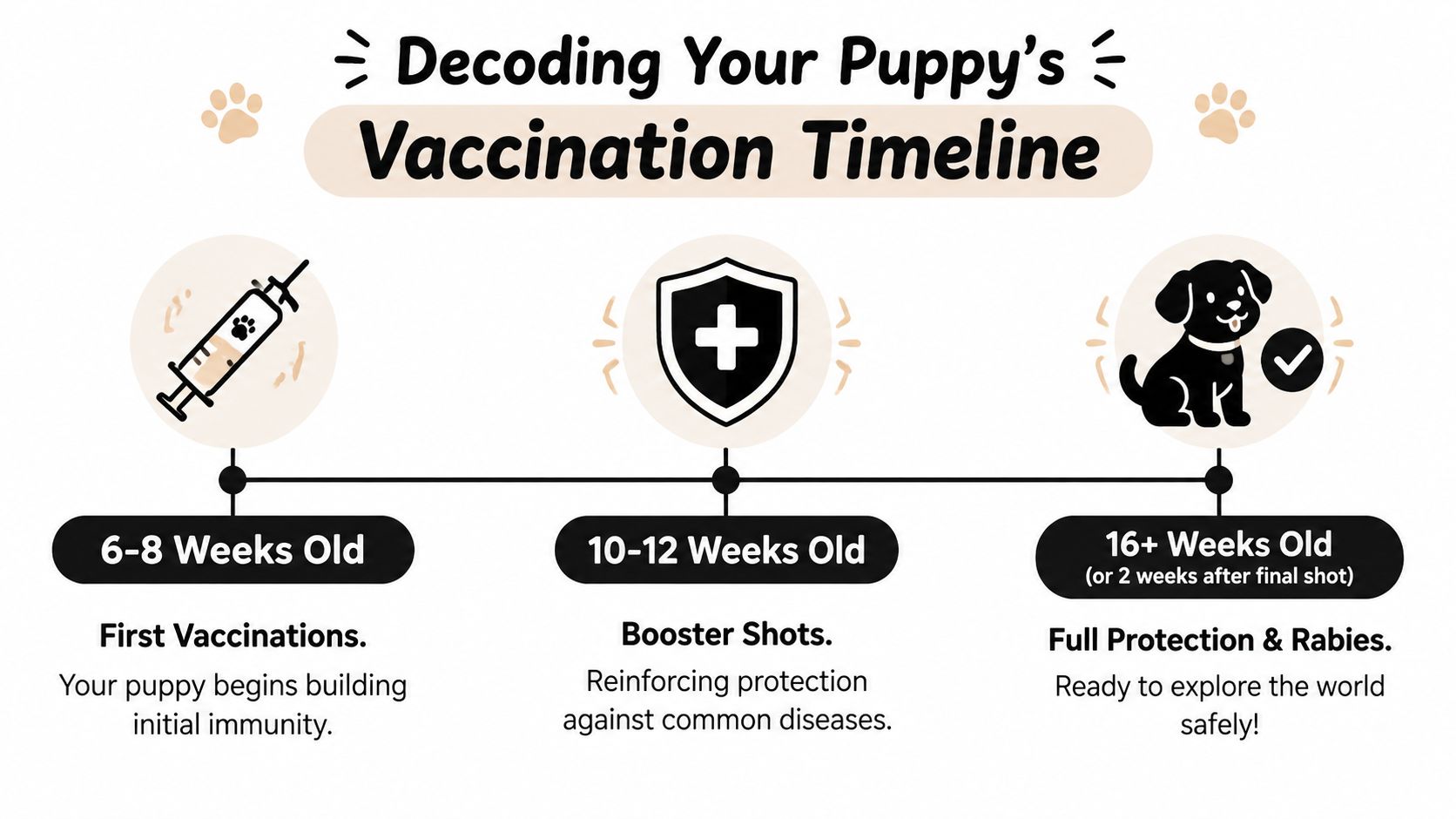
A vaccination record gives you a more useful plan than a general age chart. Schedules vary, so your veterinarian may adjust the timing for your puppy's health, earlier records, and local disease risks. The pattern is a series of doses, not one injection that immediately makes every public outing safe.
Vaccinations commonly start around 6 to 8 weeks and continue every 2 to 4 weeks until at least 16 weeks, according to veterinary guidance collected by PetMD. Each dose supports the developing immune response, while the spacing allows your veterinary team to account for how young puppies build protection.
A simple way to read the schedule
| Stage | What it means | Outdoor approach |
|---|---|---|
| 6 to 8 weeks | The initial vaccination stage begins | Choose protected observation, carrying, and approved private spaces |
| Booster visits | Follow-up doses reinforce the developing protection | Continue controlled exposure and follow your veterinarian's restrictions |
| Final core dose, often around 16 weeks | The primary course reaches its final stage | Ask when your veterinarian considers public ground appropriate |
| About 1 to 2 weeks afterward | The body has time to build fuller protection | Many puppies can begin unrestricted public walks after veterinary approval |
A common milestone for unrestricted public access is about 1 to 2 weeks after the final core vaccination dose, often given at 16 weeks. For many puppies, that means waiting until approximately 18 to 22 weeks before visiting high-traffic public spaces, based on guidance on walking puppies after vaccinations.
The waiting period matters because protection does not become complete as soon as the injection is given. Your puppy's immune system needs time to respond. The date of the final shot and the date of the first unrestricted walk therefore may be different.
Why your veterinarian's answer may differ
A puppy in a quiet home with a private yard has different daily options from one whose only bathroom area is communal grass. Local disease activity, medical history, and the vaccine product used can also change the recommendation.
Ask your veterinarian:
- Which vaccines does my puppy still need?
- Which outdoor surfaces and dog interactions are acceptable right now?
- What exact date should we use for unrestricted walks?
Put that date on your calendar. Until then, follow the vaccination course as a staged permission system. Private, controlled experiences may be suitable earlier, while dog parks and heavily used public ground should wait. This approach protects health without treating the entire outside world as off-limits.
Safe First Outings Before Full Vaccination
Your puppy doesn't need to miss the outside world while you wait for veterinary clearance. The safest early outings focus on what your puppy can see, hear, and smell, rather than allowing unrestricted contact with shared ground.
The Dogs Trust guidance on a puppy's first walk recommends controlled, low-risk experiences such as carrier outings, private fenced yards, and contact with known fully vaccinated dogs. Use those experiences to build familiarity without turning every trip into a health gamble.
Start with protected observation
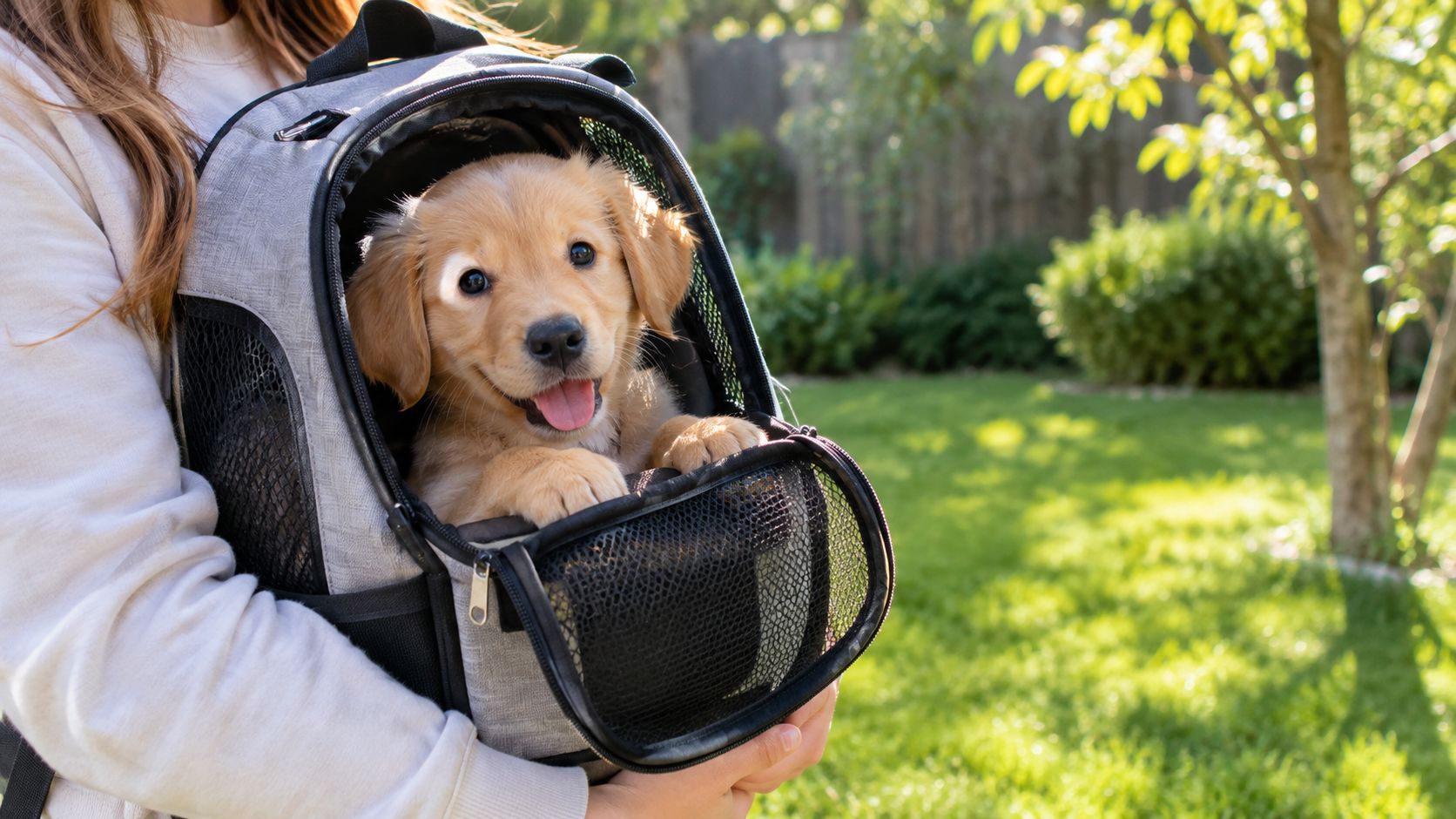
Carry your puppy outside, or use a secure carrier or stroller. Choose a calm location where you can maintain distance from unknown dogs. Let your puppy watch pedestrians, cars, bicycles, umbrellas, and ordinary neighborhood activity while you offer small treats for relaxed observation.
Keep the carrier stable and make sure your puppy can't climb out. Don't place the carrier on visibly dirty ground, and don't allow strangers or unfamiliar dogs to reach inside. Your puppy's experience should feel calm and controlled, not like an open invitation to every passerby.
A short car ride can add another useful layer of learning. Secure your puppy properly, keep the vehicle comfortable, and let them experience the sounds and movement of travel. Never use an unsecured puppy on your lap while the vehicle is moving.
Use private spaces carefully
A clean private fenced yard can provide room to sniff, walk, and investigate. Check the space first. If unknown dogs regularly enter it, if sick animals have recently visited, or if you can't control who uses the ground, ask your veterinarian whether another option would be safer.
A friend's yard can work under the same conditions. The space should be controlled, and the resident dog should be healthy, known to you, and fully vaccinated. Keep the first meeting quiet. Let the dogs observe each other, provide escape space, and end the visit if either dog becomes worried or overwhelmed.
Here's a short visual guide to carrying your puppy safely during early outdoor exploration:
Build a socialization menu
Choose one manageable experience at a time:
- Different people: Invite calm adults to sit nearby rather than reaching over the puppy.
- Household sounds: Let your puppy hear doors, appliances, traffic, and distant construction at a comfortable volume.
- New surfaces: Offer safe textures indoors or in an approved private area, such as a mat, cardboard, tile, or a towel.
- Known dogs: Arrange brief contact only with dogs whose health and vaccination status you understand.
- Puppy classes: Ask your veterinarian whether a controlled class is suitable for your puppy's current vaccination stage.
Watch your puppy's body language. If they freeze, hide, tremble, repeatedly try to escape, or stop taking food, increase distance and give them a break. Socialization isn't a contest to expose your puppy to everything in one afternoon. A calm, successful experience teaches more than an overwhelming one.
The Big Day Your Puppy's First Real Walk
Your puppy's first public walk should happen after your veterinarian confirms that the post-vaccination waiting period is complete. A common framework places unrestricted public access about 1 to 2 weeks after the final core dose, but use the date your own veterinary team gives you, especially if your puppy's schedule differs from the usual pattern.
Preparation starts at home. Fit a comfortable harness and check that your puppy can move their shoulders freely. Attach a standard leash, gather high-value treats, poop bags, and any identification your puppy wears, then practice walking a few steps indoors before facing public distractions.
The first walk should be deliberately uneventful. Choose a quieter route instead of a crowded park, and avoid areas where many dogs gather. You're not trying to cover distance. You're teaching your puppy that a leash, pavement, passing people, and outdoor sounds can all be handled safely.
Let the puppy set the pace
Keep the leash loose whenever possible. If your puppy pulls toward a smell, stop rather than pulling back, then reward them when they turn toward you or soften the leash. If they pause, let them look. If they sniff, give them time.
A first walk works better as a sniffari than a march. Sniffing gives your puppy information about the environment and can help them process unfamiliar surroundings. You can stand in one safe spot and reward calm behavior while your puppy takes in the scene.
First-walk rule: End while your puppy is still coping well. A short, positive outing gives you a better foundation than an ambitious trip that leaves them frightened or exhausted.
Watch for signs that the environment is too intense. Repeated jumping, frantic pulling, tucked posture, constant scanning, refusal of treats, or attempts to retreat all suggest that you should create distance or go home. Don't force greetings to prove that your puppy is friendly.
For additional leash foundations, use this dog training guide for first-time owners. It can help you reinforce attention, calm movement, and cooperative handling as public walks become part of your routine.
Common Mistakes to Avoid on Early Adventures
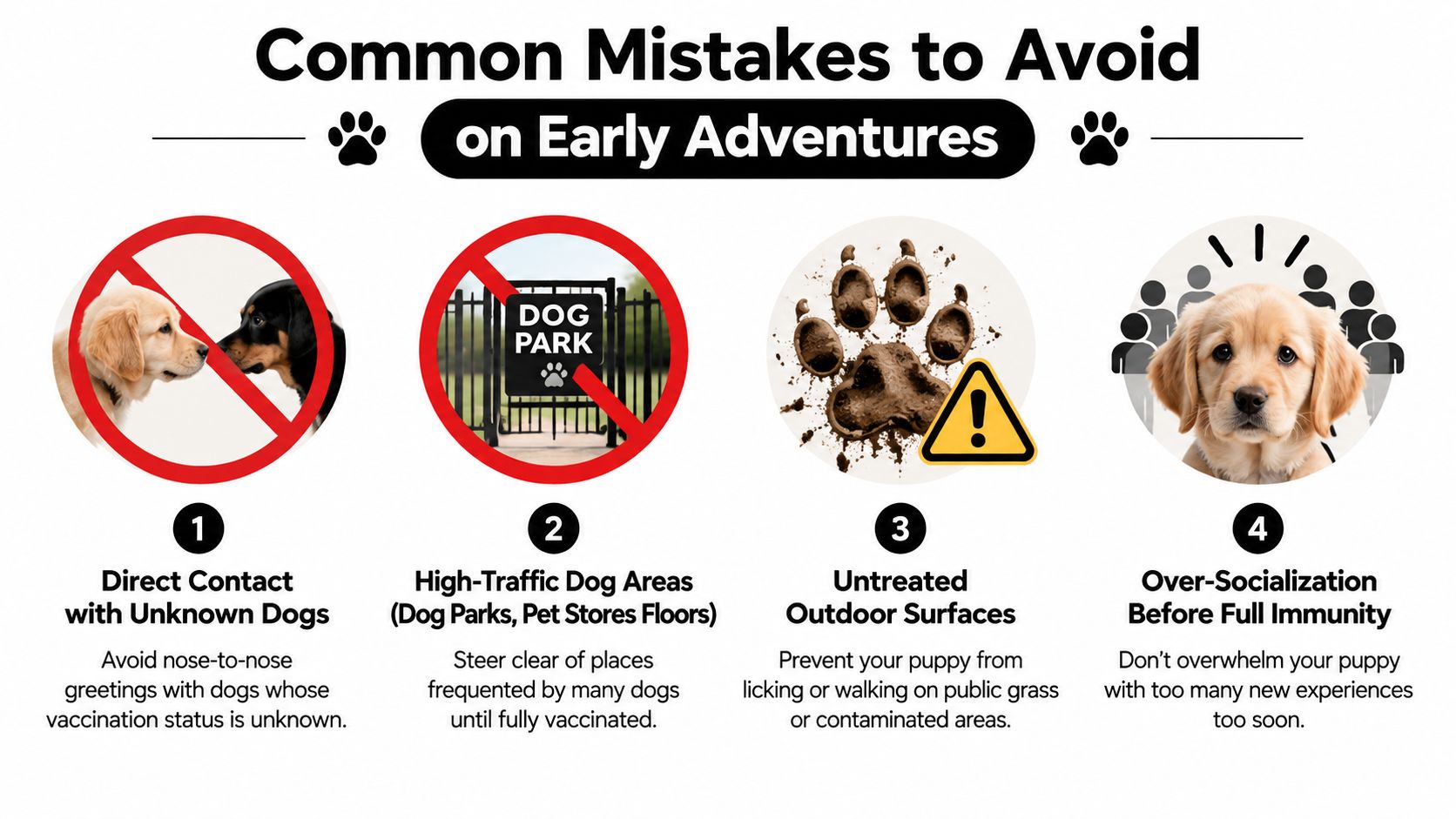
A puppy's first outdoor experiences can go wrong even when the owner has good intentions. The most common problem is treating all outdoor locations as equally safe. They aren't. A quiet private yard and a crowded dog park present very different challenges.
Skip high-contact places
Dog parks bring together unfamiliar dogs, unfamiliar handling styles, and shared surfaces. That combination makes them a poor choice for an incompletely vaccinated puppy. Even after vaccination clearance, a young dog may find a large, fast-moving group overwhelming.
Pet-store floors, communal apartment relief areas, and heavily used patches of grass deserve similar caution before your veterinarian approves them. Your puppy can still visit pet-friendly environments in a carrier if the purpose is observation rather than floor contact, but ask your veterinarian about the specific setting.
Don't greet every dog or person
A puppy doesn't need to say hello to everyone. On-leash greetings can create pressure, especially when one dog can't move away freely. Teach your puppy that passing another dog calmly, looking at you, or continuing along the path can be just as rewarding as direct contact.
If a stranger asks to pet your puppy, you can decline politely. Your puppy's comfort and health come first. A calm “not today” protects the training plan you're building.
Notice the hidden physical risks
Parasite prevention should be part of your veterinarian conversation before outdoor access expands. Weather matters, too. Pavement can become uncomfortable for small paws in hot conditions, while cold, wet, or windy weather can overwhelm a young puppy quickly.
Use your hand to assess a surface, choose sheltered routes, and watch your puppy's energy and breathing. Don't turn an outing into a test of endurance. If your puppy seems uncomfortable, move indoors and try again under gentler conditions.
For help interpreting tense interactions and preventing problems around other dogs, this resource on how to stop aggressive behavior toward other dogs can offer useful training context. Early boundaries are easier to teach than repeated, stressful encounters.
Your Confident Start to a Lifetime of Exploring
Bringing a puppy outside is a gradual process, not a single appointment or age milestone. Protect the early vaccination period, begin safe socialization during the sensitive developmental window, and expand from carrying and private spaces to public walks when your veterinarian gives clearance.
That phased approach helps your puppy grow into a dog who can investigate the world without being overwhelmed. It also gives you a practical way to make decisions based on your home, neighborhood, and available outdoor spaces.
PawCraft creates a personalized 30-day dog training plan based on your puppy's breed, age, environment, and behavior challenges, with daily exercises and clear progression. Visit PawCraft to answer the brief questionnaire and receive a structured plan for your puppy's next month.