A puppy urinates frequently because bladder control is still developing, especially during the first 4–6 months. A useful rule is roughly one hour of holding capacity per month of age, so a 2-month-old usually needs a break about every 2 hours, while a 4-month-old may manage about 4 hours.
You're probably reading this with a phone in one hand and a cleaning cloth in the other. Your puppy has squatted again, perhaps for the fifth time that morning, and every new puddle raises the same question: is this ordinary puppy behavior, or is something wrong?
Frequent urination can be completely normal in a young puppy. It can also signal a urinary problem, especially when the pattern changes, the urine comes out in tiny painful dribbles, or your puppy starts drinking much more than usual. The useful answer isn't just counting every trip outside. It's learning to read the volume, triggers, age, and accompanying signs.
By the end, you'll have a practical way to separate immature bladder control from true medical polyuria, plus a clear plan for what to track and when to call your veterinarian. If this is your first dog, these first-time dog owner tips can also help you build the wider daily routine that makes toilet training easier.
The Moment You Start Counting Every Pee
Maya had brought home an eight-week-old puppy on a Saturday. By Monday morning, she had a notes app full of entries: “7:05, outside,” “7:22, accident,” “7:41, outside,” and “8:10, tiny puddle by the chair.” She wasn't sure whether the puppy was drinking too much, whether she was missing an important training step, or whether the repeated squats meant a trip to the clinic.
That worry is common. Puppies often urinate after waking, eating, drinking, playing, greeting someone, or becoming excited. A small bladder can fill quickly, and a puppy may not yet connect the sensation of pressure with the decision to walk toward the door. The result looks chaotic to a person, even when the puppy's body is following a normal developmental pattern.
The first question isn't “How many times?” It's “How much urine is coming out, and what else is happening?”
A puppy that produces small amounts at predictable moments may need more opportunities to go outside. A puppy that produces unusually large volumes, drinks constantly, strains, cries, or suddenly changes after making progress belongs in a different category.
That distinction matters because scolding can't fix a urinary infection, a blockage, or a congenital leakage problem. At the same time, a medical worry can make house training feel far more frightening than it needs to be. The calm approach is to start with age and routine, then look for changes that don't fit.
For Maya, the answer wasn't to panic over every puddle. She needed shorter intervals, trips outside after naps and play, and a simple log showing whether the accidents were small and predictable or part of a broader change. That kind of observation gives you something useful to share with a veterinarian and something practical to adjust at home.
Why Puppy Bladders Are Smaller and Weaker Than You Think
A puppy's urinary system is still learning coordination. The bladder has limited capacity, the muscles that help hold urine aren't fully reliable, and the nervous system is still learning to interpret “I'm becoming full” before it turns into “I need to go now.”
The familiar one-hour-per-month rule is a training guide, not a promise. It gives you a starting point for planning breaks, then you adjust for your puppy's size, sleep, water intake, excitement, and activity. A puppy who has just wrestled with a toy will usually need to go sooner than one who has been sleeping.
A practical age guide
| Puppy Age | Approximate Holding Time | Typical Bathroom Break Frequency |
|---|---|---|
| 2 months | About 2 hours | Every 1–2 hours when awake, with extra trips after sleep, food, drink, and play |
| 3 months | About 3 hours | Several planned breaks through the day, plus activity-related trips |
| 4 months | About 4 hours | Regular breaks remain necessary, especially during active periods |
| 5 months | About 5 hours | Many puppies are gaining control, but overnight needs may still vary |
| 6 months | About 6 hours | Some puppies can manage longer intervals, though routine still matters |
The Royal Kennel Club's veterinary guidance gives a more cautious picture for early puppyhood. It describes 8–10-week-old puppies as needing to urinate about every hour, or even every 30 minutes to an hour, and recommends elimination breaks every 1–2 hours while awake, every 4 hours even while resting, with overnight outings until roughly 5 months of age. Those intervals reflect normal developmental variation, not a failure to train (Royal Kennel Club guidance on puppy urination).
Use the rule as a starting point
UC Davis Veterinary Medicine's housetraining schedule estimates 8–10 elimination breaks daily for puppies 6–14 weeks old, decreasing to 6–8 daily at 14–20 weeks, 4–6 daily at 20–30 weeks, and 3–4 daily at 30 weeks and older (UC Davis housetraining schedule). Those figures show the general direction: toileting demand falls as control improves.
Don't deliberately force a puppy to hold urine for the maximum interval. Take the puppy out before the likely limit, reward success immediately, and shorten the schedule if accidents happen. The goal is to make the right choice easy, not to test bladder endurance.
Normal Frequent Peeing vs Medical Polyuria
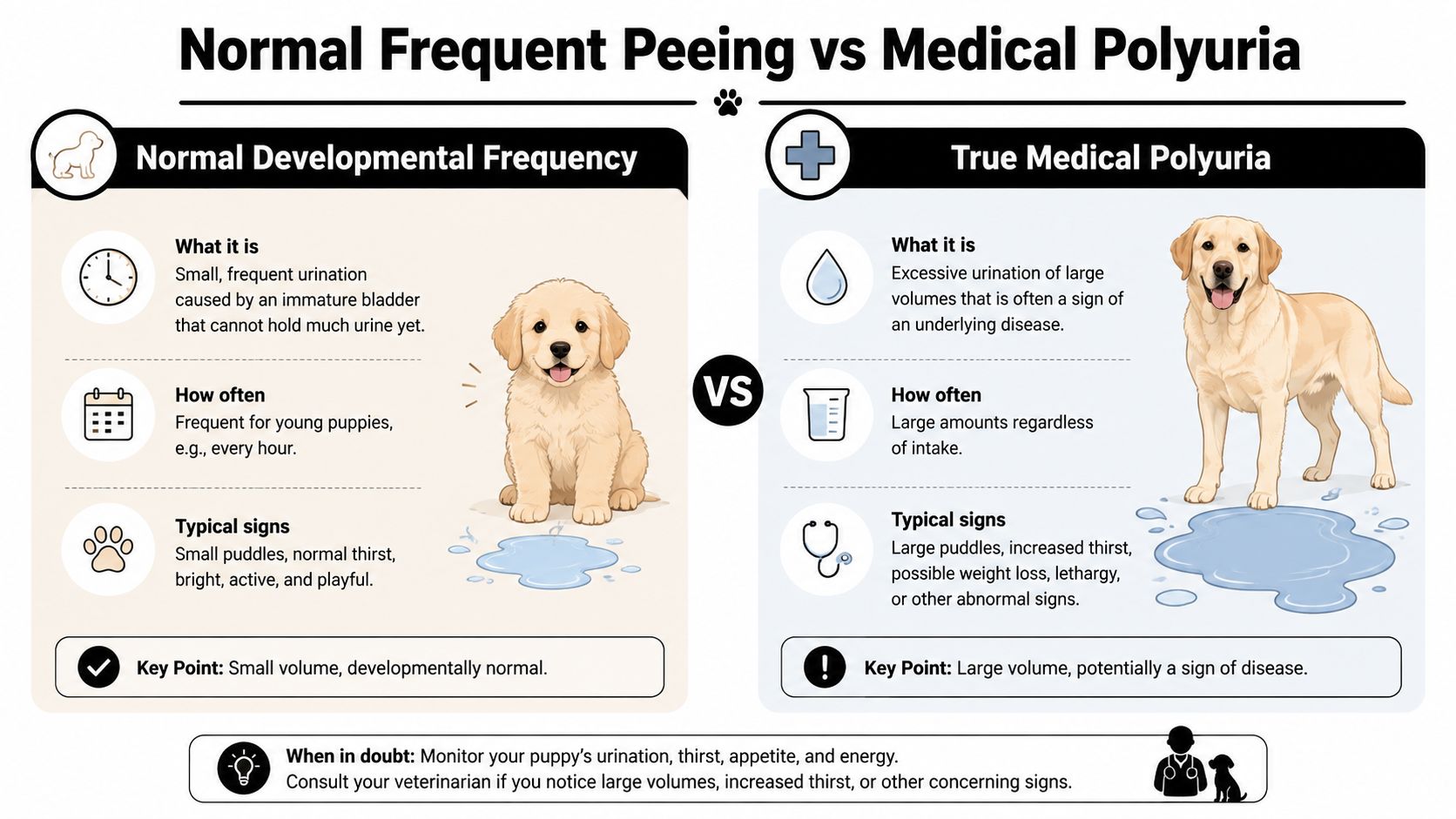
Normal puppy frequency usually comes from limited storage capacity. The puppy may squat often, but each trip produces a small amount, and the pattern makes sense: waking, eating, drinking, energetic play, or emotional excitement.
Medical polyuria is different. It means the body is producing an unusually large total volume of urine. The puppy may empty a substantial amount repeatedly, refill the bowl more often, and seem persistently thirsty. The concern isn't that the puppy goes out often. It's that the kidneys or the body's fluid regulation may not be handling urine normally.
Compare the pattern, not just the count
| What you notice | More consistent with development | More concerning for polyuria |
|---|---|---|
| Amount | Small puddles or short voids | Larger volumes repeatedly |
| Thirst | Normal for the puppy's routine | Noticeably increased or constant |
| Triggers | Sleep, play, food, water, excitement | Happens regardless of activity or intake |
| Timeline | Fits the puppy's age and improves with scheduling | Sudden change, persistent pattern, or loss of earlier progress |
Excitement urination and submissive urination can also confuse the picture. A puppy may release a small amount during an enthusiastic greeting or a stressful interaction. That's different from a puppy producing large volumes throughout the day.
Several medical conditions can cause excessive drinking and urination, including diabetes mellitus, chronic kidney disease, hyperadrenocorticism, pyelonephritis, liver disease, electrolyte disorders, and diabetes insipidus. Kidney failure, Cushing's disease, and diabetes mellitus are repeatedly identified among the common causes in dogs (veterinary overview of excessive drinking and urinating).
Small amounts tied to predictable puppy events usually point toward immature control. Large amounts paired with increased thirst deserve veterinary attention.
Water intake can rise after heat, exercise, stress, pain, or intense activity. Young, hyperactive, large-breed dogs can also develop primary polydipsia, where excessive drinking leads to secondary urination. The important point is to notice whether the drinking and urine volume changed together, rather than restricting water on your own.
Red Flags That Mean Call the Vet Sooner Rather Than Later
One isolated accident rarely tells you much. A cluster of changes does. Frequent urination becomes more urgent when your puppy appears uncomfortable, produces almost nothing despite repeated attempts, or seems unwell between bathroom trips.
Look for these specific changes
Straining or repeated squatting: If your puppy pushes, crouches, or tries again and again while producing only drops or no urine, contact an emergency veterinary service immediately. A blockage can prevent normal emptying and may become life-threatening.
Blood in the urine: Visible blood warrants a same-day call to your veterinarian. Infection, crystals, stones, irritation, or trauma can cause it.
Crying, flinching, or obvious pain: Pain during urination isn't a house-training issue. Arrange veterinary advice promptly, particularly if the puppy keeps trying to go.
Constant dribbling or wet bedding: Small frequent voids are not the same as continuous leakage. Congenital problems such as an ectopic ureter can cause urine to dribble without a normal decision to squat, especially in young females and certain breeds. Arrange a veterinary appointment rather than just adding more outdoor breaks (veterinary discussion of puppy leakage and frequent urination).
A sudden increase in thirst or urine volume: Call your veterinarian promptly, especially if the change persists beyond a single hot or highly active period. Increased drinking and large-volume urination can point to a body-wide problem.
Loss of earlier progress: A puppy that had begun staying dry and suddenly starts urinating indoors needs an assessment of both routine and health. Don't assume stubbornness.
Lethargy, vomiting, poor appetite, poor weight gain, or fever: These signs make the situation more than a simple training setback. Contact your veterinarian the same day for guidance.
A urinary tract infection can cause frequent, urgent small voids. Bladder stones or crystals can irritate the bladder, while congenital defects can cause leakage. Diabetes, kidney problems, liver disease, and electrolyte disturbances can create a different pattern involving thirst and larger volumes. You don't need to identify the disease at home. You need to describe what you're seeing and respond at the right speed.
Red flags at a glance
| Red Flag | Possible Concern | Response Time |
|---|---|---|
| Straining with little or no urine | Obstruction or severe lower urinary tract problem | Emergency care immediately |
| Blood or painful urination | Infection, crystals, stones, or trauma | Same-day veterinary call |
| Constant dribbling or wet bedding | Leakage or congenital urinary abnormality | Prompt appointment |
| Large volumes plus increased thirst | Systemic disease affecting fluid balance | Prompt veterinary assessment |
| Lethargy, vomiting, poor appetite, or fever | More serious illness | Same-day veterinary advice |
| One or two predictable small accidents | Immature control or training gap | Adjust routine and monitor |
What Actually Happens at the Vet Visit
A urinary appointment usually starts with questions, not a dramatic procedure. Your veterinarian or veterinary technician will want to know your puppy's age, approximate number of trips, whether each void is small or large, water intake, diet, activity, training progress, and any recent illness or household change.
Bring your monitoring notes if you have them. “A lot” means different things to different people, while “small puddles after waking, then normal urine during play” gives the clinical team a usable pattern.
The routine checks
The physical examination may include a gentle abdominal check, temperature measurement, and inspection around the external genital area. The team may feel whether the bladder seems unusually full or uncomfortable and look for visible irritation or evidence of leakage.
A urine sample provides the next layer of information. Urine specific gravity indicates how concentrated the urine is, which helps the veterinarian assess whether the kidneys are concentrating properly. A dipstick and microscopic sediment check can look for findings such as glucose, blood, protein, crystals, and other changes.
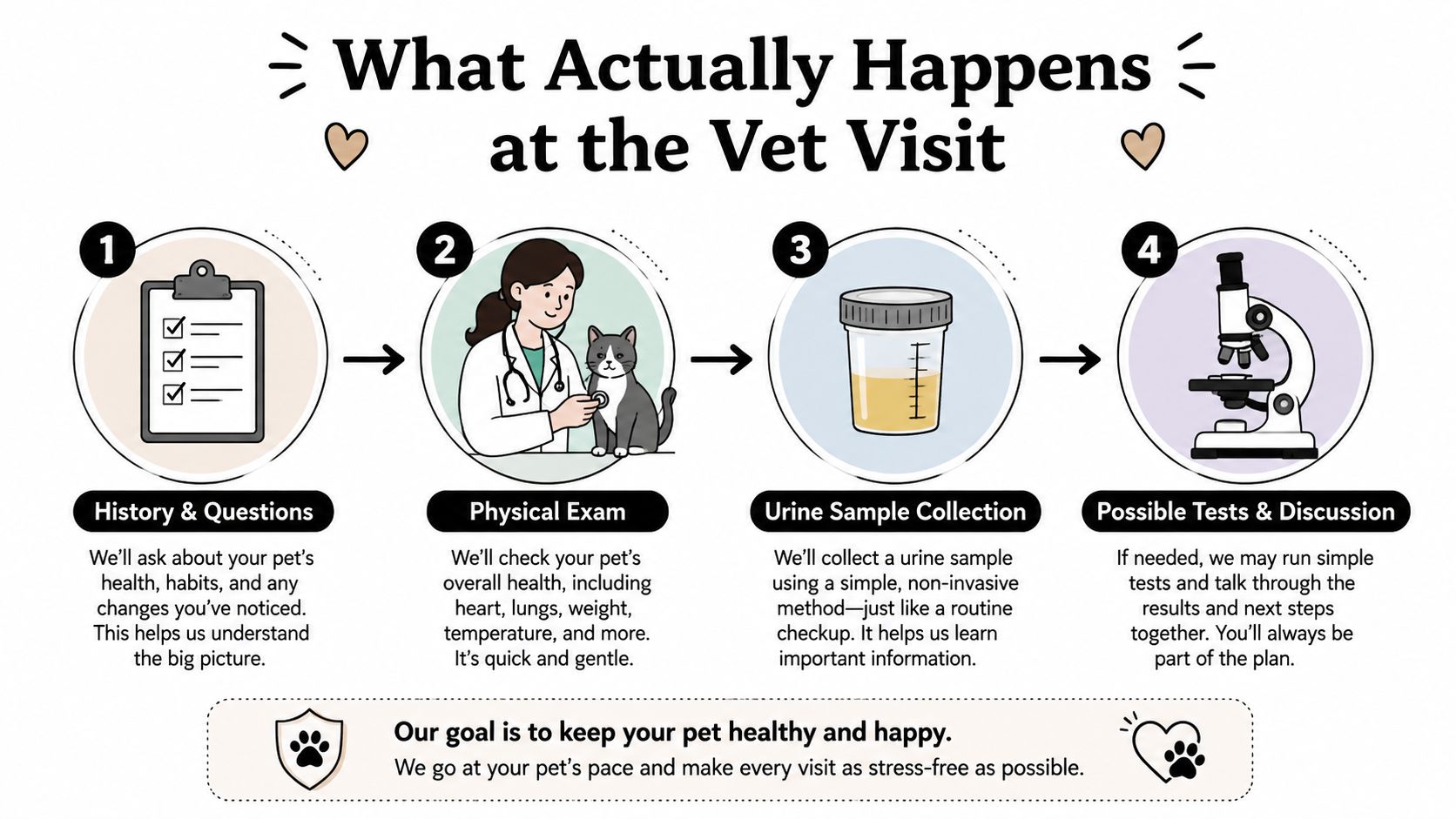
If the urine results suggest a broader issue, the veterinarian may recommend blood work. Serum chemistry and glucose testing can help investigate kidney function, diabetes, and other systemic causes of excessive urination. Imaging, such as an ultrasound or contrast study, may be added when stones, obstruction, anatomical abnormalities, or persistent leakage need closer examination.
The exact cost depends on the clinic, location, tests, and treatment, so ask for an estimate before additional diagnostics are performed. The useful question isn't only “Is the urine normal?” Ask what the result means in everyday language, what needs treatment, and what change should trigger a follow-up call.
This video offers a visual overview of the kind of routine process owners may encounter:
Home Management, Schedules, and a Simple Monitoring Log
A good home plan has two jobs. It gives a developing bladder enough opportunities to succeed, and it creates a record that helps you recognize when the pattern doesn't fit normal puppyhood.
Start with the age-based interval as your outer limit, then schedule trips sooner around predictable triggers. First thing in the morning, after naps, after active play, after eating or drinking, and before bed are the high-value moments. If your puppy is absorbed in a game, interrupt gently and take them out before the excitement turns into an accident.
A sample day
The table below uses the puppy ages commonly described as 8, 12, and 16 weeks. It's a flexible template, not a promise that every puppy will follow the same clock.
| Time of Day | 8-Week-Old Puppy | 12-Week-Old Puppy | 16-Week-Old Puppy |
|---|---|---|---|
| On waking | Outside immediately | Outside immediately | Outside immediately |
| After breakfast | Outside soon after eating | Outside soon after eating | Outside soon after eating |
| Midmorning | Break after play or nap | Planned break, sooner after activity | Planned break, sooner after activity |
| After lunch | Outside after eating and drinking | Outside after eating and drinking | Outside after eating and drinking |
| Afternoon | Frequent breaks around naps and play | Regular breaks with activity checks | Regular breaks, adjusted to success |
| Evening meal | Outside after eating | Outside after eating | Outside after eating |
| Before bed | Final trip immediately before sleep | Final trip immediately before sleep | Final trip immediately before sleep |
| Overnight | May need an outing | May still need an outing | Individual needs vary |
Keep a simple log for several days:
| Time | Trigger | Success or accident | Water and notes |
|---|---|---|---|
| 7:00 | Waking | Outside success | Normal drinking |
| 7:30 | Breakfast | Outside success | Ate normally |
| 8:15 | Play | Accident or success | Very excited |
| 9:30 | Nap | Outside success | Slept quietly |
Patterns often reveal the fix. Skipped breaks during play call for an earlier interruption. Incomplete house-training means more supervision and immediate rewards outside. Scent-marking in a multi-dog home may produce small repeated spots in selected places, while submissive or excitement urination usually happens during greetings or pressure. Keep greetings calm, avoid looming over the puppy, and reward relaxed behavior.
Use an enzymatic cleaner on accidents so lingering odor doesn't invite repeat visits. A crate should be large enough for the puppy to stand, turn, and lie down comfortably, but excessive extra space can make one end feel like a toilet. Don't restrict water as a training shortcut. Keep normal access available during the day and discuss unusual thirst or bedtime changes with your veterinarian.
For structured guidance beyond toilet training, dog training for first-time owners can help you build consistent cues, supervision, and reward timing.
Bringing It All Together for Your Specific Puppy
Two unhelpful assumptions trap new owners. The first says every puddle proves the puppy is failing. The second says every frequent pee must be a disease. Neither is a reliable decision rule.
Start with development. Compare your puppy's age with the approximate holding interval, then account for sleep, food, water, excitement, and activity. If the urine comes in small amounts at understandable times and your puppy otherwise seems well, improve the schedule before interpreting the accident as a crisis.
Next, check management. Were breaks skipped because play ran long? Did the puppy wake from a nap and head straight to the floor? Did a visitor trigger an excitement accident? Did you clean the spot thoroughly? These questions can solve a surprising amount of everyday puppy urination without blaming the puppy.
A calm decision flow
- Observe the amount. Small, predictable voids fit immature control more closely than large repeated volumes.
- Notice thirst. A clear increase in drinking changes the picture.
- Review the pattern. Sudden change, constant dribbling, or loss of previous reliability deserves more attention.
- Check for red flags. Straining, pain, blood, vomiting, lethargy, or inability to urinate moves the decision toward veterinary care.
- Log the details. Record time, trigger, approximate amount, water intake, and behavior for 72 hours when there's no emergency sign.
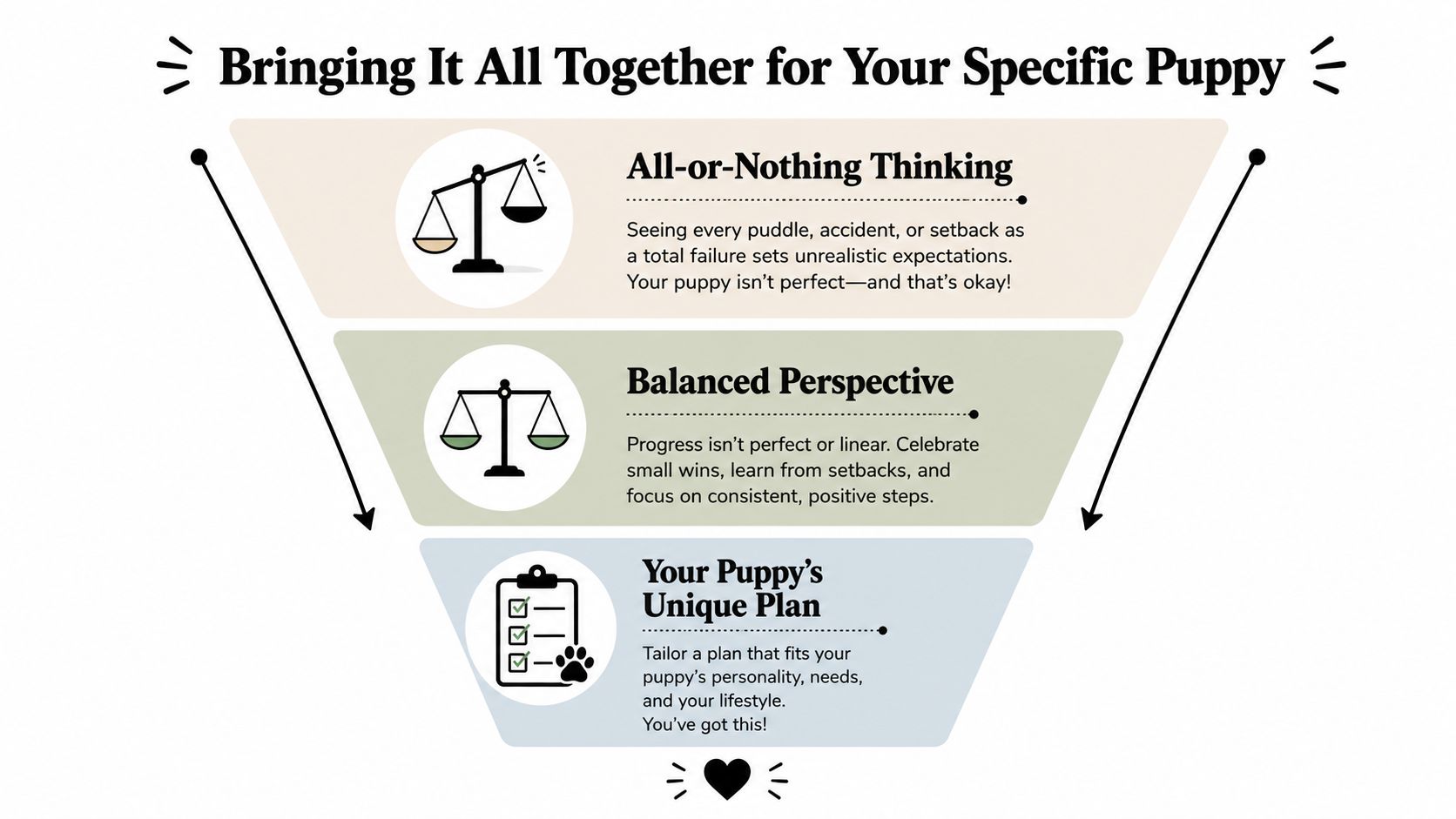
Observation is more useful than worry. If you need a broader, individualized approach to recurring behavior patterns, a dog behavior modification plan can sit alongside, not replace, veterinary care when physical symptoms are present.
Your puppy doesn't need you to guess perfectly. They need timely bathroom opportunities, calm supervision, and an owner who notices when the pattern changes. Use the schedule, keep the log, and call your veterinarian when the evidence moves beyond normal developmental frequency.
PawCraft creates a personalized 30-day dog training program based on your puppy's age, breed, environment, and behavior challenges, with daily exercises and clear progression. Visit PawCraft to build a practical routine that supports toilet training and the rest of life with your new dog.